
What counts as a creative hobby
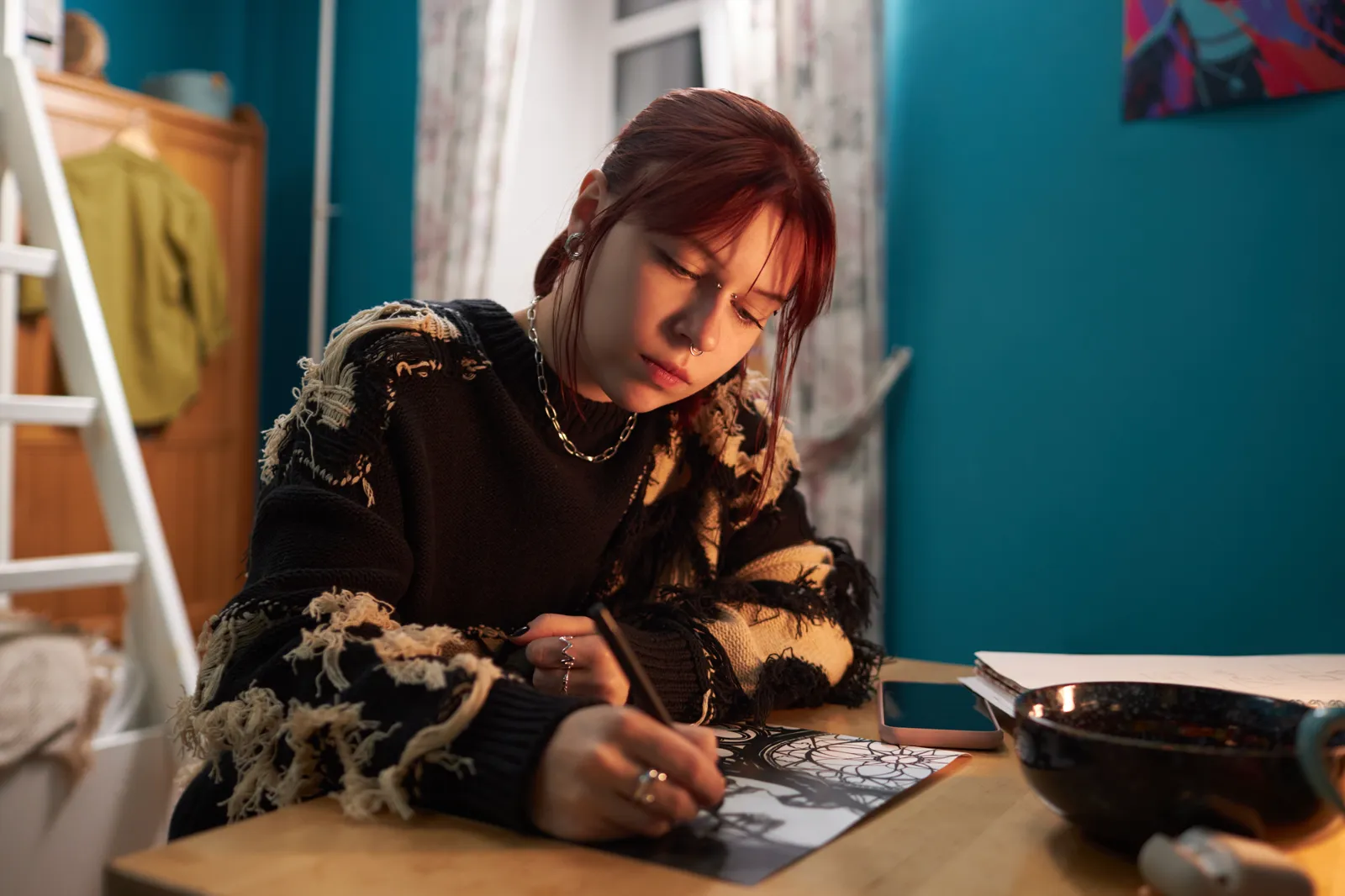
The phrase "creative hobbies" gets used loosely. For this guide, I mean any hobby where you make something with your hands, your eyes, your voice, or your words. A sketch is a creative hobby. A loaf of sourdough is, too. So is a paragraph of a journal entry, a chord progression on a guitar, a hand-lettered card to a friend, a clay pot, a poem on the back of an envelope.
What separates creative hobbies from other hobbies is the small finished thing at the end. The sketch exists when you stop. The poem exists when you put the pen down. The walk doesn't leave anything behind in the same way (walks are great for other reasons). That artifact, however small, is the point.
What creative hobbies are NOT, despite what most lists imply: a path to becoming an artist, a side hustle, a content strategy, or a personal brand. If the question "is anyone going to see this" is in your head when you start, the hobby is contaminated. You're allowed to make a thing nobody will see. You're allowed to make a thing you'll throw away. The hobby is the making, not the showing.
What to make today (a picker for the indecisive day)
If you don't want to read the rest of this page and just want to be told what to do, here's the picker. Pick a sense and a time. We'll hand you one specific creative thing to make today.
For a deeper match with more inputs (energy, social, supplies, indoor/outdoor), use the Low-Stimulation Hobby Finder. The widget above is the creative-only cut of that bigger tool.
Why creative hobbies are good for you in ways consuming isn't
Most of an adult's day is consumption. Email, scrolling, podcasts, news, TV, group chats. The phone in your pocket is a consumption machine running at 16 hours a day if you let it. Creative hobbies are the opposite vector. They produce something, however small, instead of pulling something in.
The brain treats those two vectors differently. Consumption gets a spike and a fade. You scroll for an hour, you feel slightly hollow when you put the phone down. Production gets a smaller spike and a longer afterglow. You sketch for 20 minutes, you feel slightly settled three hours later. The research on flow states, attention restoration, and creative engagement is fairly consistent on this. We won't oversell the case (one hobby isn't therapy), but the effect is real and shows up in two weeks.
There's also a quieter benefit that doesn't get measured well. Creative hobbies rebuild a sense of agency. The current era hands you a lot of inputs (news, opinions, content) and not many outputs. Making one small thing on purpose every day is an antidote that doesn't require any belief system or productivity hack. It's just the act of producing.
The 40+ creative hobby list, grouped by what you'd use
The cleanest way to sort creative hobbies is by what part of you is doing the work. Eyes and hands (visual arts). Words and head (writing). Voice and ears (music). Hands and patience (crafts). Eye and lens (photography). Body and others (performing). And the mixed/digital category for everything that doesn't fit. Each block below includes a small-start kit so you know exactly what to buy to begin.
Drawing, painting, and image-making
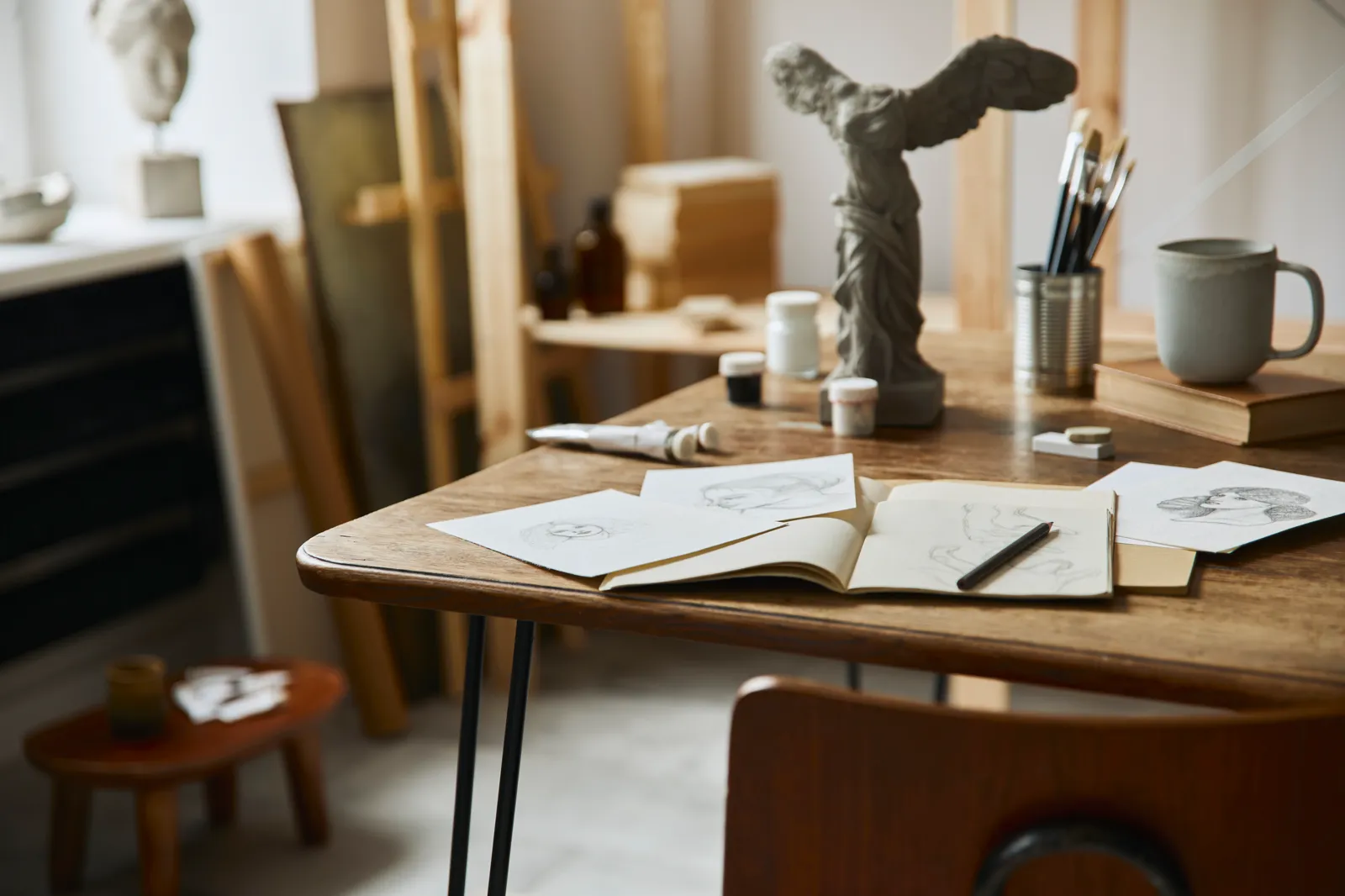
Small-start kit: a pencil ($1), a Moleskine notebook ($15), a $15 watercolor set. Done.Sketching, drawing from observation, doodling, blind contour drawing, charcoal, ink drawing, watercolor painting, acrylic painting, oil painting, gouache, pastel art, hand lettering, calligraphy, urban sketching, botanical illustration, comic drawing, cartooning, mandala drawing, zentangle, digital art (Procreate on iPad).
Hobbies that come out as language
Small-start kit: a Leuchtturm1917 notebook ($25) or a free Google Doc. Optional: a fountain pen ($20-40), if you want to want it.Journaling, gratitude journaling, morning pages, writing fiction (one paragraph at a time), writing poetry, writing short stories, blogging, letter writing, keeping a commonplace book, keeping a reading journal, writing memoir vignettes, blackout poetry, copying favorite passages by hand, writing prayers, writing a memory from childhood.
Hobbies that make sound on purpose
Small-start kit: a $50 ukulele, or a $10 harmonica, or just your phone's voice memo app.Playing guitar, playing piano, playing ukulele, playing harmonica, singing (alone, in a choir, in the car), songwriting, learning a song by ear, music theory, simple home recording, learning two chords and writing a verse, joining a band, joining a choir, drumming on anything, building a vinyl rotation as a curation hobby.
Hobbies where the hands carry most of the work
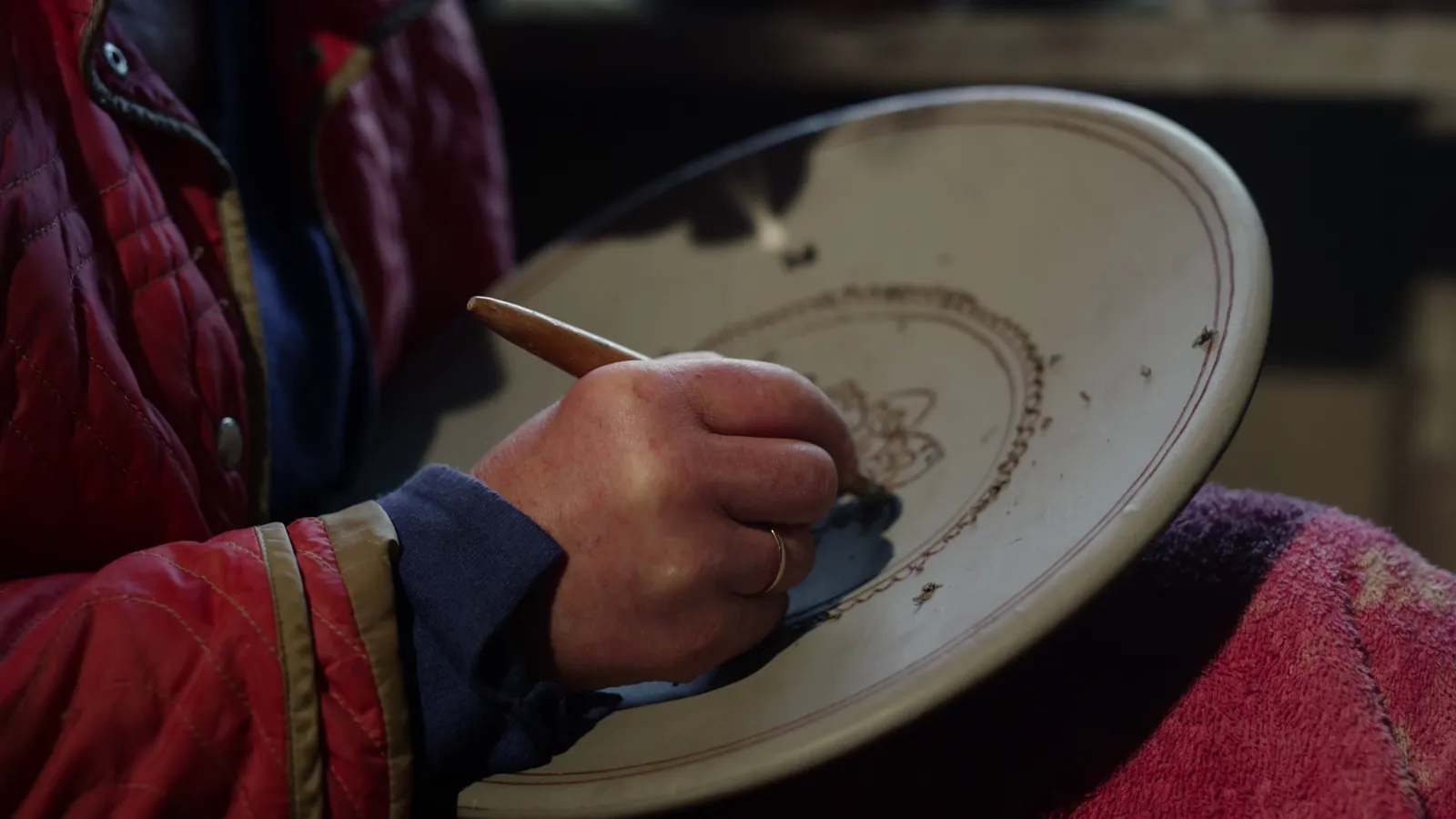
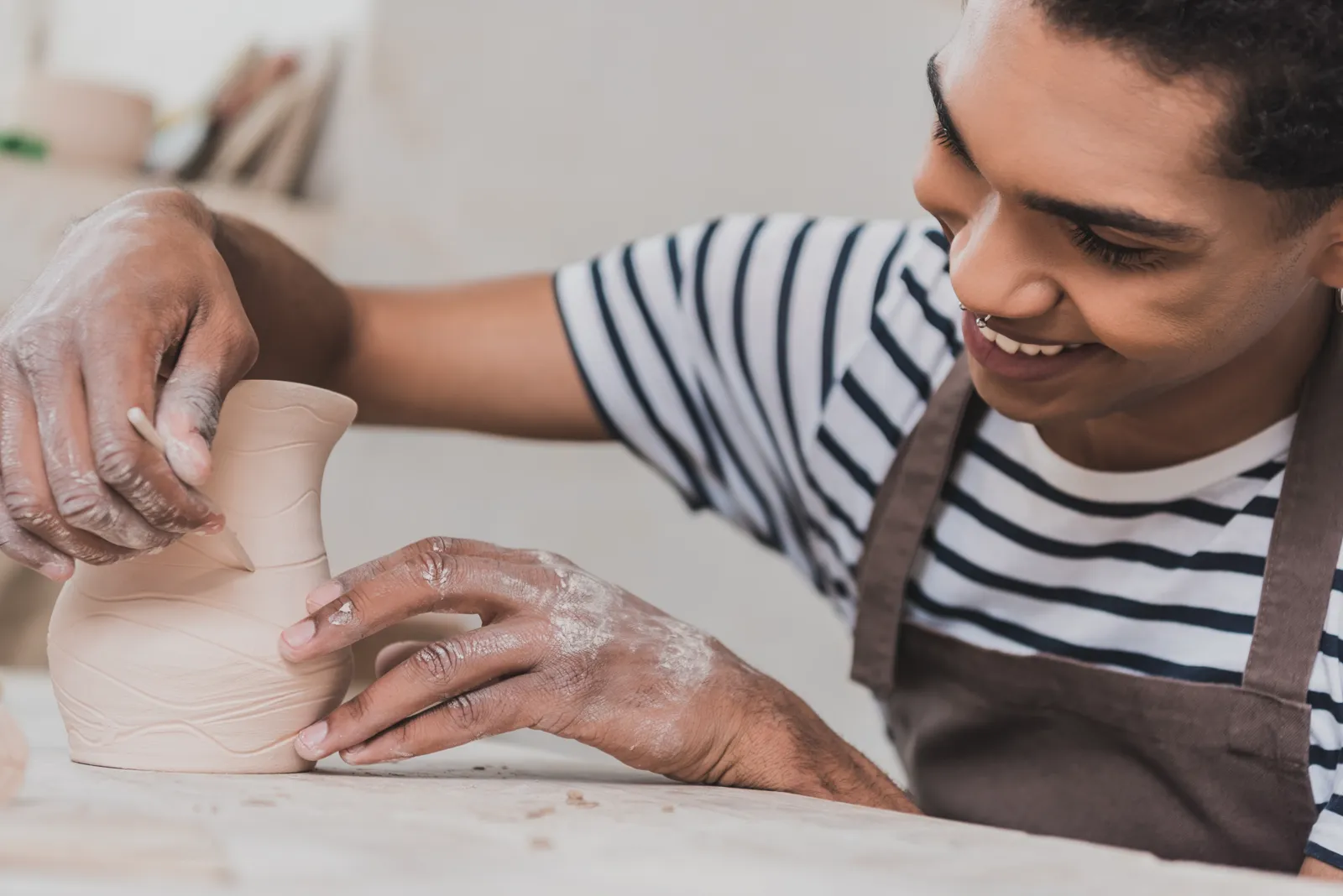
Small-start kit varies by craft: knitting ($20 for yarn + needles), embroidery kit ($15), woodworking (a knife + a stick from the yard for whittling, or a $40 starter chisel set), pottery (a $10 block of air-dry clay).Knitting, crocheting, embroidery, cross-stitch, needlepoint, sewing, quilting, mending, visible mending, sashiko stitching, macramé, weaving, felting, basket weaving, beading, jewelry making, leathercraft, woodworking, whittling, soap making, candle making, pottery (wheel or hand-built), air-dry clay sculpting, scrapbooking, card making, bookbinding, origami, paper quilling.
The lens is the creative act
Small-start kit: the phone in your pocket. Optional next step: a thrift-store film camera ($30) for a slower practice.Phone photography on daily walks, film photography (35mm cheap, then 120 if you fall in love), digital photography with the camera you already own, photo walks, street photography, portrait photography (start with people you love), nature photography, plant photography, still life, photo journaling (one photo per day), darkroom (cyanotypes are the cheapest entry).
Creative hobbies that happen in front of (or with) other people
Small-start kit: a class fee ($10-30 per session, usually). Improv classes, drop-in dance, community theater auditions, choir.Improv classes, community theater, dance (salsa, swing, ballet, hip-hop, country line), stand-up comedy open mics, choir, voice lessons, storytelling at a Moth-style open mic, songwriter rounds at a bar, magic tricks, juggling, learning to play the harmonica well enough to bust it out at a campfire.
The newer creative hobbies (with the same low-cost entry rule)
Small-start kit: free software + a year of practice. Garageband, Procreate (iPad), DaVinci Resolve, OBS, an Anchor podcast account, a public blog on free Ghost or WordPress.Digital art (Procreate, Photoshop), motion graphics, hand-drawn animation, podcasting (one episode a week, ten minutes long), video editing, vlogging (for one person, not for an audience), home recording with simple gear, AI-assisted creative writing as a practice, generative art, building a small game in a free engine like Godot, learning to code as a creative practice, fan art.
Creative hobbies for adults who feel they're "not creative"
The most common search around creative hobbies is some variation of "creative hobbies for adults who aren't creative." It's a real concern, and the answer is the same every time. You are creative. "I'm not creative" is almost always a story about quality, not capacity.
Two things go wrong for most adults around creativity. The first is that childhood art got compared to other childhood art (or to "real" art) and a verdict was reached early. The second is that the modern algorithmic feed serves up unbelievably good work constantly. Your unfiltered first attempt at watercolor looks bad next to the top 0.01% of watercolors on the internet because of course it does. That's the trap.
The fix isn't to become more creative. The fix is to lower the standard for what counts. A wonky watercolor counts. A half-page journal entry counts. A song you sang to yourself in the car counts. A photo you took on a walk and didn't post counts. The first month of any creative hobby is the recalibration. You go from "I'm not creative" to "I'm making this thing on purpose" in roughly two weeks of 15 minutes a day. It's not magic. It's just evidence accumulating.
Creative hobbies by time (so it actually fits your day)
One of the bigger objections to creative hobbies is "I don't have time." This isn't wrong, exactly, but it's usually a framing problem. Most of the hobbies on this list fit cleanly into 15 or 30 minutes a day. Here's the breakdown by time.
15 minutes
- One pencil sketch of an object in front of you. The mug. The plant. The dog.
- One paragraph of writing about a memory.
- Two chord changes on guitar.
- One blackout poem made from a paragraph of yesterday's newspaper.
- One photo, one caption, one journal note about why you took it.
- Three rows of knitting.
- Five lines of calligraphy practice.
30 minutes
- A page of watercolor practice (one wash, two more washes on top once dry).
- An embroidery section: 30 minutes of small stitches.
- Writing a poem from start to finish, even a bad one.
- Learning a new song on whatever instrument you have.
- A photo walk: 30 minutes outside, 12 photos, pick the best three later.
- Soldering a small kit (the $10 starter kits on the internet take about 30 minutes).
An hour
- A finished pencil drawing.
- A first draft of a short story (1,000 words).
- An hour of music practice with focus.
- A small handmade card with calligraphy and watercolor.
- An hour of pottery class.
A weekend afternoon
- One finished painting.
- A short photo project: a theme, ten photos, edited.
- A complete song, written and recorded on a phone voice memo.
- A small woodworking project (a cutting board, a wall hook, a shelf).
- A bound zine of 8 pages.
Cheap creative hobbies (most of them, actually)
Most creative hobbies are cheap to start. The expensive ones are exceptions. Here's the breakdown.
Free: writing in any notebook, blackout poetry from old newspapers or library discards, singing, dancing alone, photography with your phone, found-object collage, sketching on whatever paper is around, slow walking and noticing (sets up everything else), reading aloud, voice memo recordings, free music software (GarageBand, Audacity, BandLab).
Under $20: a Moleskine ($15), a pack of pencils ($5), a small watercolor set ($15), a deck of cards for visual prompts ($5), a packet of stamps for letter writing ($14), a single skein of yarn and one pair of needles ($20), a thrift-store harmonica or recorder ($5-10), a starter embroidery kit ($15), a block of air-dry clay ($8), one good fountain pen ($20).
$20 to $100: a Kala beginner ukulele ($60), a thrift-store film camera ($30-100), a real sketchbook + colored pencil set ($40), a watercolor kit with decent paper ($50), a beginner woodworking knife set ($40), an iPad mini + Procreate (used, $100 range).
The expensive exceptions: a pottery wheel ($300-1000), a full DSLR camera kit ($500+), a serious set of oil paints ($150-300), a quality acoustic guitar ($200-500), a sewing machine ($150-500). None of these are required to start. All of them are graduations you earn into.
How to actually start a creative hobby (without making it a project)
Pick one. Not three. The single biggest predictor of whether someone sticks with a creative hobby is whether they picked one and did it small, daily, for two weeks. Not whether they picked the "right" one.
Anchor it to a time that already exists in your day. Right after dinner. The 15 minutes after the kids go down. Saturday morning before anyone wakes up. The phone has lived in those windows for years; you're moving in next door.
Buy the smallest possible starter kit. A pencil and a notebook. A $15 watercolor set. A $10 harmonica. A free notes app. Do not buy the deluxe kit before you've spent two weeks with the cheap one. The men and women who quit creative hobbies the fastest are almost always the ones who started with the $400 setup.
Aim for boring for a month. A bad 15-minute sketch is still 15 minutes of sketching. The first two weeks feel slightly performative. That fades. Quality follows consistency, never the other way around. The first three "real" pieces you'll make are pieces 50 through 100. Pieces 1 through 49 are the path there.
Tell one person. Not as a public commitment, just as context. "I'm doing 15 minutes of watercolor after dinner this week." Most households quietly rearrange themselves around a thing they understand.
Keep the phone in another room when you're doing the hobby. This is the one rule that actually predicts whether the hobby sticks. If the hobby and the phone are in the same room, the phone usually wins.
The time for a creative hobby is there. It's been going into the phone.
The honest version of "I don't have time for creative hobbies" is usually that the time is going into the phone. Pax Gate is a gentle app blocker that adds one small pause before the apps you scroll without thinking. Most users reclaim around 45 minutes a day in the first two weeks. That's enough for any creative hobby on this page.
Join the Pax Gate waitlistWhere to go from here
If you want a wider hobby list (not just creative), our companion List of Hobbies covers 150+ examples across 12 categories with a multi-axis filter for time, cost, and setting. The two demographic cuts are Hobbies for Women and Hobbies for Men, both of which cover creative hobbies plus everything else (outdoor, kitchen, social, movement, mind).
If the phone is the actual obstacle to starting any creative hobby, two of the free Pax Tools are worth a glance. The Doomscrolling Audit maps where the time is going. The Phone Habit Trigger Finder identifies the cues that pull you in. Use one of them. Don't audit yourself to death. The point isn't the audit; the point is the hobby.
For the matched picker of all hobbies (calm and creative both), the Low-Stimulation Hobby Finder is six quick questions and a personalized list from a 130+ hobby catalog.
FAQ
What are creative hobbies?
Creative hobbies are activities where you make something with your hands, eyes, voice, or words. The big buckets: visual arts (drawing, painting, photography), writing (fiction, poetry, journaling), music (instruments, singing, songwriting), crafts (knitting, woodworking, sewing, ceramics), performing arts (improv, dance), and mixed/digital (digital art, video, podcasting). What separates them from other hobbies is the small finished thing at the end. Even a half-page sketch counts.
What is a good creative hobby for adults?
For adults, the best creative hobby is one that fits the time you actually have (15 to 30 minutes a day, mostly) and has a low cost of entry. Sketching with a pencil. Writing in a notebook. Watercolor with a $15 starter set. Learning an instrument you already half-know. Photography with the phone in your pocket. The trap is picking the most photogenic one. The win is picking the smallest one and starting tomorrow.
How do I start a creative hobby when I'm not creative?
You are creative. "I'm not creative" is almost always a story about quality, not capacity. The fix isn't to become more creative; it's to lower the standard for what counts. A wonky watercolor counts. A half-page journal entry counts. A song you sang to yourself in the car counts. The first month is the recalibration. After two weeks of 15 minutes a day of any creative hobby, the "I'm not creative" feeling fades, because you have evidence you are.
What are cheap creative hobbies?
A pencil and a Moleskine ($15 together). A library card and a notebook. A free phone camera plus a 15 minute walk. A harmonica ($10). A watercolor starter set ($15). A pack of colored pencils ($10). A used paperback for found-poetry blackout work ($2). A free podcast app for recording voice memos. Most of the best creative hobbies cost less than $20 to start; the expensive ones (pottery wheels, full DSLR kits, complete oil sets) are graduations you earn into after the simple version sticks.
What are creative hobbies you can do at home?
Almost all of them. Drawing, painting, watercolor, calligraphy, hand lettering, knitting, crocheting, embroidery, sewing, scrapbooking, card making, candle making, soap making, model building, photography (around the house), writing, journaling, learning an instrument, songwriting, music production, podcasting, digital art, collage. The ones that need a studio or outdoor space (pottery wheel, plein-air painting, sculpture, woodworking) are the exceptions, not the rule.
What's the easiest creative hobby to start?
Three are tied for easiest. Sketching with a pencil and any paper. Writing one paragraph in a notebook (a memory, a description of the room, a list of small things you noticed today). And taking one photo a day with the phone in your pocket. All three need under $5 of supplies, can be done in 5 minutes, and produce a tangible artifact you can look back at. After two weeks of any of them, you'll know whether you want to invest more.
Do creative hobbies improve mental health?
The research is fairly consistent that they do. Repetitive creative work (knitting, sketching, instrumental practice) drops cortisol and increases heart rate variability after even short sessions. The "flow state" associated with absorbed creative work has been linked to lower anxiety, better sleep, and higher reported life satisfaction. We won't oversell the case; one hobby isn't therapy. But the effect is real and shows up in two weeks for most people.
What are creative hobbies for women / men?
Most creative hobbies work for any adult. We have two longer guides that slice the broader hobby catalog by audience: Hobbies for Women (with hand-craft heavy picks and a life-stage breakout) and Hobbies for Men (with whittling, woodworking, restoration, and music heavy picks). The creative-only cut is what you're reading. The gender-specific guides are bigger lists that include creative plus everything else.
One last thing
You're allowed to be bad at this. You're allowed to make something nobody will ever see. You're allowed to do 15 minutes of it after dinner and stop. The point is the making, not the finished piece. Pick one creative hobby this week and start.