

The Gratitude Affirmation Builder
Pick the areas that matter most to you right now, up to four. The builder composes a personalized set of gratitude affirmations, one from each area, plus a simple way to use them. Tap "shuffle" for a fresh set from the same areas.
A good gratitude affirmation is not a wish. It is a true thing said slowly enough to feel. Say it like you mean it, because you do.
Why gratitude affirmations beat the generic kind
Ordinary positive affirmations have a known problem, and it is worth understanding before you build a practice on them. Wood, Perunovic, and Lee (2009) ran a now-famous study and found that repeating positive self-statements like "I am a lovable person" actually made people with low self-esteem feel worse. The reason is a painful gap: when a statement clashes with what you actually believe about yourself, saying it out loud just highlights the distance between the two, and the mind rebels.
Gratitude affirmations sidestep this trap almost entirely, because they point at something real rather than something aspirational. "I am successful" can feel like a lie when you do not feel successful. But "I am grateful for the people who show up for me" is simply true, and there is no gap to feel, no belief to argue with. You are not asserting a future; you are noticing a present. That anchoring in reality is why gratitude is one of the more robust and believable foundations for an affirmation practice, and why these tend to work for people that generic affirmations fail.
How to use them so they actually work
An affirmation you rattle off does nothing; an affirmation you feel can slowly shift your default attention. A few things make the difference:
- Say them slowly, and feel each one. The point is not the words but the moment of appreciation they trigger. Pause on each line long enough to actually feel the truth of it before moving on.
- Keep them true and specific. A gratitude affirmation only works if you believe it, so the more specific and real, the better. Swap the generic version for the particular one from your own life whenever you can.
- Anchor them to a time. Morning to point the day at the good, evening to close it on appreciation. Attach the practice to an existing habit (first coffee, getting into bed) so it does not depend on willpower.
- Put them where you will meet them. A note on the mirror, your lock screen, a card by the kettle. Repetition is what turns a nice sentence into a shift in attention, and repetition needs a cue.
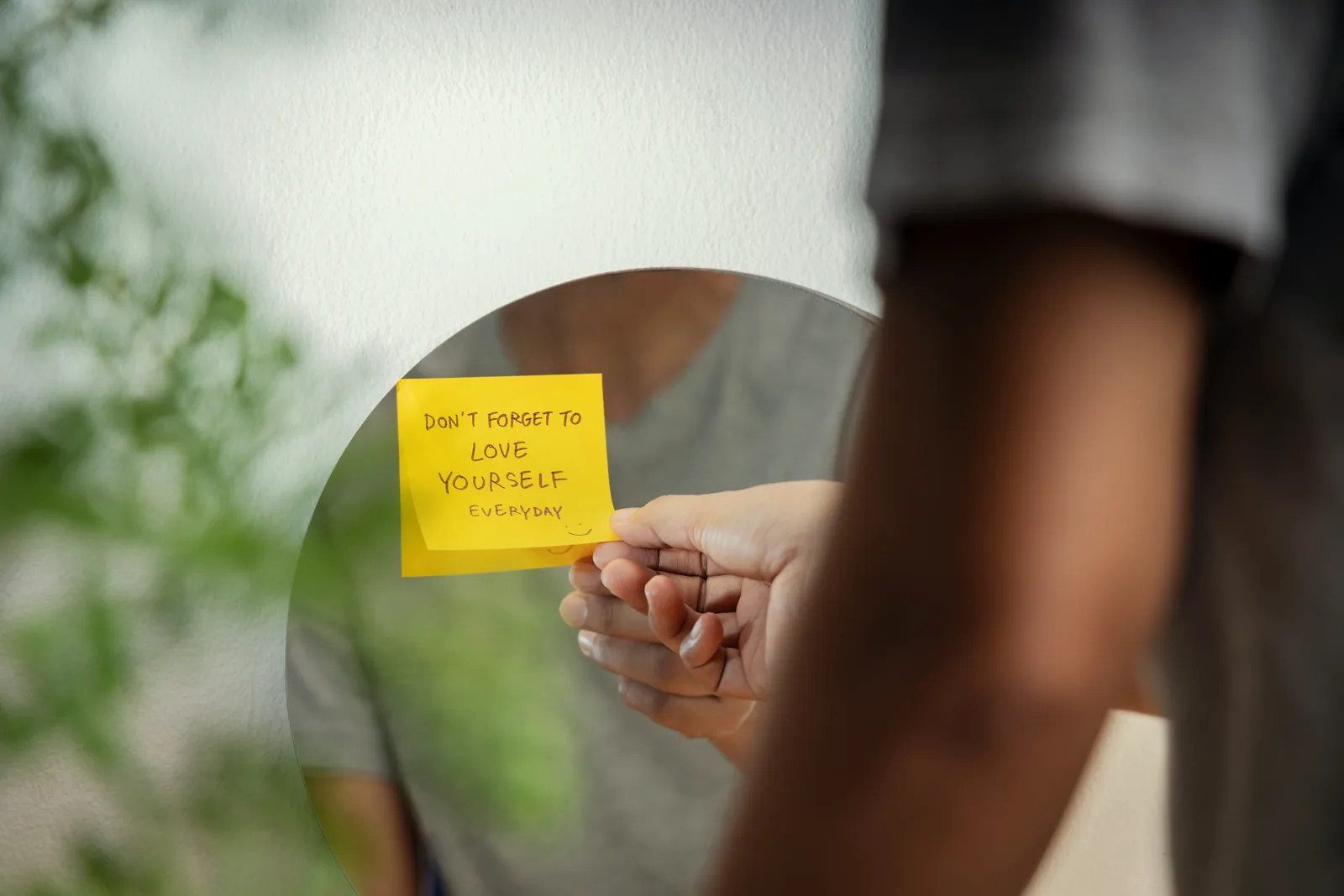
An affirmation only works if you meet it
The weak point of any affirmation practice is remembering to do it. A card on the mirror helps in the morning; the rest of the day, the affirmation is out of sight while your attention drifts to the feed. Pax Gate is a mindful app blocker, and the pause it puts in front of your most distracting apps can surface a gratitude prompt, right where the scroll usually starts. It is an affirmation practice with a hundred built-in reminders a day, delivered at the exact moments your attention was about to leave for someone else's life.
Join the Pax Gate waitlist A true thing to say to yourself, right at the door of the feed.A collection of gratitude affirmations, by area
If you would rather browse than build, here is a fuller set to borrow from. Read each slowly, and keep only the ones that feel true; a gratitude affirmation you do not believe is worth nothing, and one you do is worth returning to daily.
When affirmations still feel hollow
If even gratitude affirmations feel flat, the fix is almost always the same: make them more true. A hollow affirmation is usually one that is too generic to grip anything. "I am grateful for my life" is so broad it slides off; "I am grateful that I got to hear my kid laugh today" catches, because it is a real moment your attention actually touched. Trade the abstract for the specific and most of the hollowness goes.
And if a gratitude affirmation still lands wrong on a hard day, that is allowed. Gratitude is a supportive practice, not a demand to feel fine when you do not. On a genuinely difficult morning, you do not have to affirm that everything is wonderful; you can affirm one small true thing ("I am grateful for this cup of coffee and five quiet minutes") and let that be enough. The practice is meant to widen your view toward the good, never to override a feeling that deserves to be felt.
Prefer someone else's words?
Affirmations are gratitude in your own voice; quotes are gratitude in a borrowed one. The companion guide has a Gratitude Card Builder and a curated, accurately attributed collection for when a line from someone else lands better.
Read the gratitude quotes guideRelated guides and tools
FAQ
What are gratitude affirmations?
Short, first-person, present-tense statements that put your attention on what you already have and appreciate, such as "I am grateful for a body that carries me through my day." They differ from ordinary positive affirmations in a crucial way: rather than asserting something you hope will become true, they name something genuinely true right now. That anchoring in reality is what makes them land rather than feel like wishful thinking, and it is why gratitude is one of the more reliable foundations for an affirmation practice.
Do gratitude affirmations work?
They can, especially compared with generic positive affirmations, which can backfire for some people. Wood, Perunovic, and Lee (2009) found that repeating statements like "I am a lovable person" made people with low self-esteem feel worse, because it clashed with their beliefs. Gratitude affirmations sidestep this, because they point at something real rather than aspirational; it is hard to feel a painful gap when you are naming what you already have. Paired with genuine feeling and consistent use, they can help train grateful attention.
What are some examples of gratitude affirmations?
A spread across areas: "I am grateful for the quiet strength I have shown getting this far." "I have enough, and I am learning to feel it." "I am thankful for a body that does a thousand things right without being asked." "I am surrounded by more kindness than I usually notice." "Today is a gift, and I get to decide what I do with it." The best gratitude affirmations are true, specific, and felt rather than just recited. The Affirmation Builder above composes a personalized set from the areas that matter most to you.
How do you use gratitude affirmations?
Say or read them slowly, in the present tense, and pause long enough to feel each one rather than racing through. The two best times are morning (to point the day at the good) and evening (to close on appreciation, which can help sleep). Attach the practice to an existing habit so it does not depend on remembering, and keep them where you will meet them: the mirror, your lock screen, a card by the kettle. An affirmation you read once does little; one you return to daily, and feel, can gradually shift your attention.
What is the difference between affirmations and gratitude affirmations?
Ordinary affirmations are aspirational: they assert something you want to become ("I am confident"). Gratitude affirmations are appreciative: they name something good that is already true ("I am grateful for the people who show up for me"). The difference matters because aspirational affirmations can create a painful gap with your current reality, especially at low self-esteem, whereas gratitude affirmations close that gap by pointing at what genuinely exists. For many people, the gratitude version is the gentler, more robust, more believable one.
When should I say gratitude affirmations?
Morning and evening are the highest-value windows, and you can use either or both. In the morning they set the day's attention on the good before the demands crowd in. In the evening they close the day on appreciation, which tends to calm the mind and support sleep, echoing the Three Good Things research. Beyond those anchors, a gratitude affirmation is useful any time you feel yourself tipping into comparison, scarcity, or stress, as a quick redirect back toward what you have.
Sources
- Wood, J. V., Perunovic, W. Q. E., & Lee, J. W. (2009). Positive self-statements: Power for some, peril for others. Psychological Science, 20(7).
- Emmons, R. A., & McCullough, M. E. (2003). Counting blessings versus burdens. Journal of Personality and Social Psychology, 84(2).
- Steele, C. M. (1988). The psychology of self-affirmation: Sustaining the integrity of the self. Advances in Experimental Social Psychology, 21.
- Emmons, R. A. (2007). Thanks! How the New Science of Gratitude Can Make You Happier. Houghton Mifflin.
One last thing
The reason gratitude affirmations work where ordinary ones fail is almost too simple: they are true. You do not have to convince yourself of anything or manufacture a feeling you do not have. You only have to say, slowly enough to feel it, a good thing that is already the case. Build your set above, keep the lines that ring true and drop the ones that do not, put one where tomorrow morning will find it, and say it like you mean it. Not because saying so makes it true, but because it already was, and you had simply stopped noticing.