Why toddlers are scientifically different from older kids
If we are being real, most "reduce my child's screen time" articles online are the same article retitled. They aren't. The first five years of life are a different problem than the school years, and the research base is dramatically stronger for under-fives than for any other age band. The toddler brain is in a high-plasticity window for language and attention. The minutes spent on a screen aren't just minutes; they're minutes not spent in the kind of caregiver interaction that drives language acquisition at the age when language acquisition matters most.
Three findings shape almost everything else on this page. Madigan and colleagues (2020) meta-analyzed 42 studies and found a consistent association between higher toddler screen time and lower language skills. Hutton et al. (2020) found that preschoolers with heavier daily screen use showed lower integrity in brain white matter tracts that support language and emergent literacy on MRI. Christakis et al. (2004) was the foundational study linking early television exposure to later attention problems, and the pattern has held up in subsequent work. None of these prove causation. All of them point in the same direction, and the direction matters more for under-fives than for any other age.
The good news is that the same window that makes this age unusually sensitive to screen displacement also makes it unusually responsive to small changes. A few honest swaps in the parts of the day that currently default to screens tend to produce the kind of difference (more words, better sleep, calmer transitions) that older-kid interventions struggle to match. This guide is structured around that. Start with the interactive below for the real moments where it gets hard, then the research, then the AAP guidance broken down by age, then the replacement playbook.
The Toddler Screen Moment Coach
The moments most parents reach for a screen aren't the ones articles write about. They're the ones at 5 PM when dinner needs to start, or on the third hour of a delayed flight, or when a work call ran long and the toddler is at the door. Pick the moment, pick the age, and the coach below will give you the honest call (sometimes the screen really is fine), plus a research-backed swap when one's available, plus a co-viewing tip if you do end up using the screen.
The flight isn't the problem. The Tuesday afternoon at home is the problem, if the Tuesday afternoon has quietly become three hours on the iPad. Build the typical day with intention, and the exceptional days take care of themselves.
What the AAP actually says (broken down by age)
The AAP's Media and Young Minds policy statement (2016, reaffirmed since) is unusually specific for this age band, because the evidence base is unusually strong. Here's what each line in the policy means in practice.
The most common reaction to this list is to feel like the bar is unreachably high. If we are being real, almost no family hits all of it on a typical week. The point of the guidance isn't perfect compliance. It's directional. The families whose toddlers are at one hour a day, mostly co-viewed, with no screens at meals or bedtime, look very different from the families at three hours a day, mostly solo, with the iPad on at dinner. Those are the two ends of the distribution. Most of us are somewhere in the middle, and moving toward the first end produces real, measurable improvements that don't require perfection.
The video deficit (why under-2 is genuinely different)
One of the most well-documented findings in developmental media research is something called the video deficit. Anderson and Pempek (2005) coined the term to describe the consistent finding that children under about 2.5 years old learn much less from screen-based instruction than from the same content delivered by a live person. A toddler can watch a video showing where a toy is hidden and then fail to find it; the same toddler, watching a live person hide the same toy through a window, finds it easily. The difference is the social contingency: live interaction responds to the toddler, video doesn't.
This is the science behind the AAP's under-18-month no-screens rule. It isn't that screens are toxic. It's that they're an unusually poor learning input at this age, while displacing an unusually high-value one. The Baby Einstein lawsuit (Disney refunded purchasers in 2009 after the company's "educational for infants" marketing didn't hold up to peer review) is the cultural version of the same finding. Babies and young toddlers don't learn from screens the way the marketing suggests.
The implication for parents of toddlers in this age band: solo screen time in the first two years is essentially time off the language-development clock, without learning gains to compensate. After 2 to 2.5 years old, the picture shifts. Children do start to learn from well-designed screen content, especially when it's co-viewed. The video deficit is the strongest research-backed argument for the AAP's age-specific cutoffs, and it's the reason "How much screen time is okay?" has a different answer at 14 months than at 4 years.

Background TV: the invisible cost
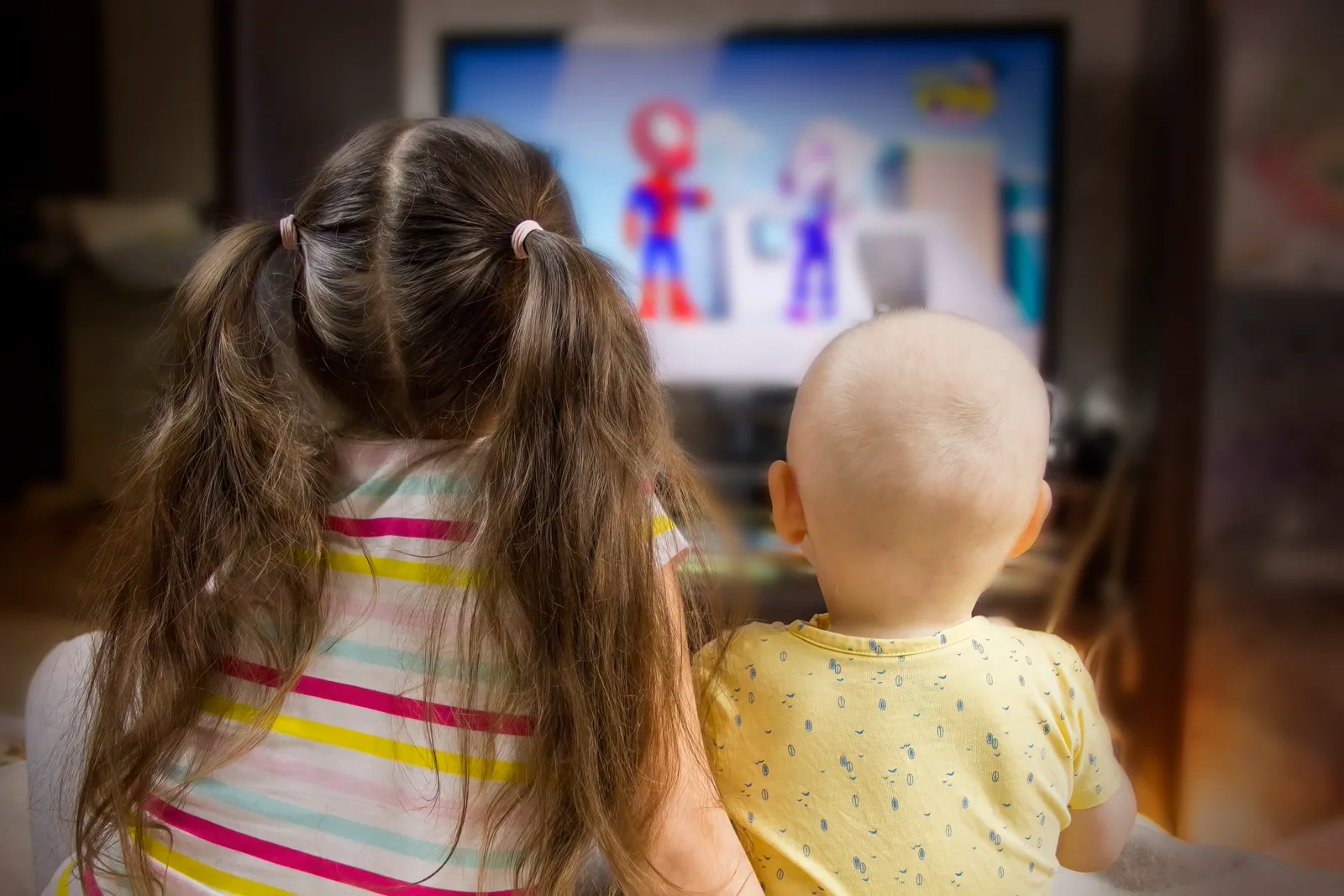
The single most underrated finding in toddler screen research, and the one most families don't realize applies to them, is about background TV. Kirkorian, Pempek, Murphy, Schmidt, and Anderson (2009) ran a careful study in which toddlers played with toys while adult-directed TV either was or wasn't on in the background. The toddler wasn't watching. The parent wasn't watching, exactly. But the data showed clear effects: both parent and toddler talked less when the TV was on, the talk was more fragmented, and the quality of the parent-child interaction dropped measurably.
The implication is uncomfortable for a lot of families. The cable news running while the toddler plays Legos, the cooking show on while making dinner, the sports highlights on a Sunday morning. None of those count as "screen time" in the way most parents track it, but all of them appear to displace the parent-child verbal exchange that the language research keeps pointing at. Tomopoulos et al. (2010) found similar effects with infant exposure to background media: even when not directly attended to, it tracked with measurable developmental differences at follow-up.
If we are being real, this is the single change most families can make with the largest measurable effect: turn off background TV when the toddler is in the room. It costs nothing, it requires no behavior change on the toddler's part, and it tends to be the easiest item in this entire guide to actually implement on Monday.
Co-viewing: the thing that actually makes screens useful
The research base for co-viewing is one of the more hopeful parts of this literature. The same minutes of the same content land very differently depending on whether a caregiver is engaged with it. A toddler watching Daniel Tiger alone is a toddler exposed to a TV show. A toddler watching Daniel Tiger next to a parent who occasionally asks "what is Daniel feeling right now?" and connects the content back to the toddler's day is engaged in a shared social-emotional learning experience. The research on Sesame Street going back decades, and more recently on Bluey and Daniel Tiger, supports the second framing as genuinely useful, especially for social-emotional learning around age 3 to 5.
Co-viewing doesn't mean watching every minute together. It means three things, in roughly this order of importance. Pick the content together (or curate the playlist so the toddler picks from your shortlist). Be in the room for at least part of it (background presence matters; you'll naturally narrate or comment). Talk about it afterward ("what happened when Bluey was sad?" turns into language input). The marginal improvement from any one of these is small. Doing all three turns the same hour from displacement into a different kind of activity.
The witching hour and other survival moments
The 4 to 6 PM window is the most reliably difficult stretch of a toddler day across virtually every family. The toddler is tired, parents are starting dinner, the structure of the school or daycare day has ended, and the hour before dinner is unstructured. This is the hour that quietly trains toddlers to expect screens, because it's the hour parents are most likely to default to screens, because the alternative requires energy parents don't have.
The thing that works better than open-ended play in this window is structured wind-down. Tired toddlers don't self-direct well. A snack first (low blood sugar drives a meaningful share of late-afternoon meltdowns), then a "helping" job that's actually a parent job slowed down (washing vegetables in the sink, stirring a bowl, mashing a banana), then a short transitional activity (audiobook, a few pages of a board book, music) buys you to dinner without the iPad. The version that fails is "go play"; the version that works is a sequence the toddler can follow.
For the genuinely hard moments (a long flight, a sick day where the parent is also sick, a work call that ran long, a doctor's office with a 45-minute wait), the AAP guidance doesn't pretend these don't exist. The research on language and white matter is about typical days, not exceptional ones. A flight isn't a Tuesday afternoon. Use the screen, sit next to the toddler if you can, and don't carry the guilt of the exceptional moment into the typical week.
The replacement playbook (by age)
The single most effective intervention isn't "less screen time." It's "more of a specific something else." Vague replacements ("they should play more!") tend to fail because they require the parent to engineer the play. Specific, low-prep replacements that don't require parent setup tend to actually displace screen time in practice.
Open-ended objects, narrated by you
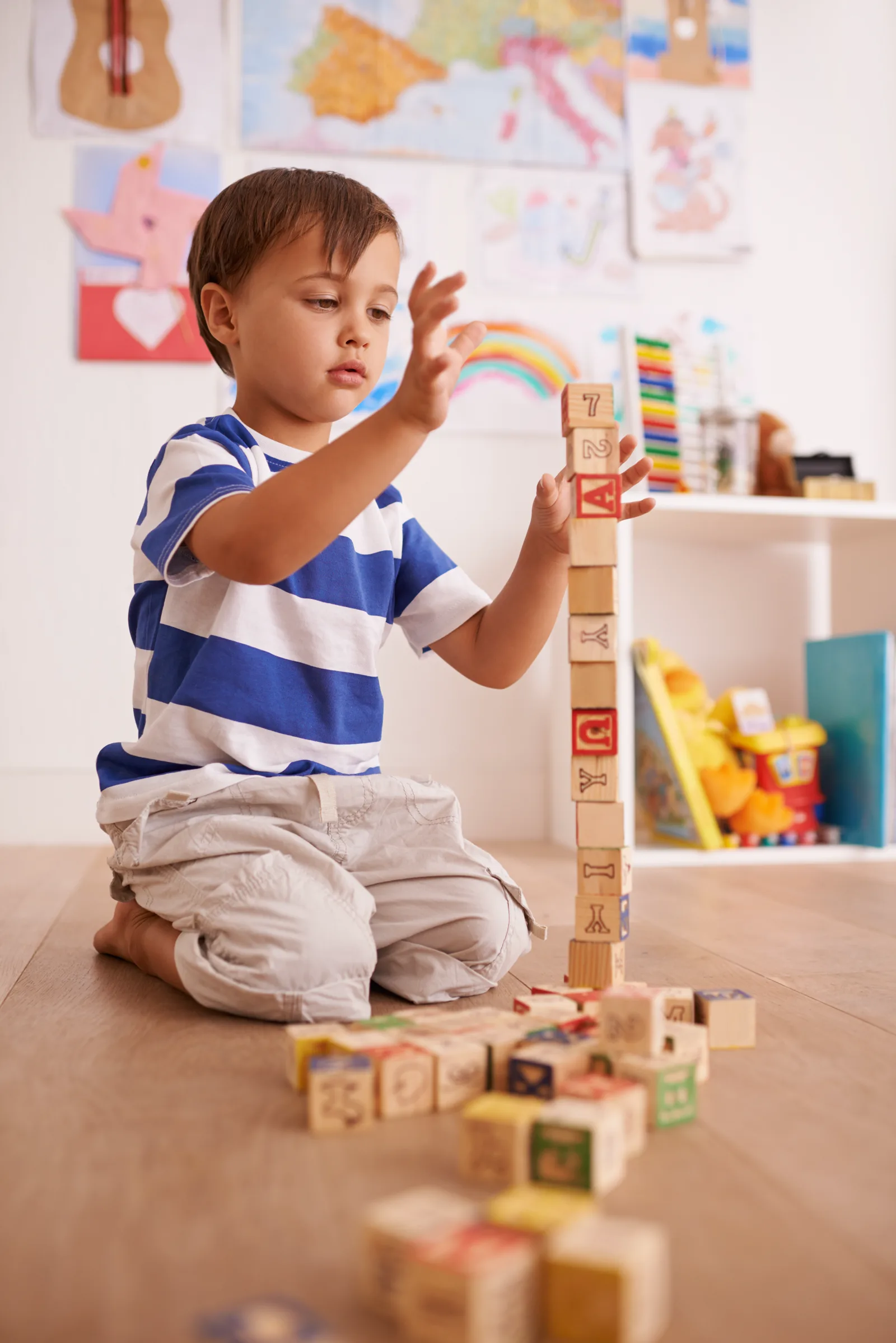
Wooden spoons, pots and pans, scarves, blocks, water in a baking tray (with a towel underneath). The toy that produces the most language input is the one that has the simplest design, because the parent ends up filling in the meaning ("you put the spoon in the pot. Now it's hot. Stirring, stirring"). Toys with batteries that talk on their own actively reduce parent-child talk; toys that don't, increase it.
Audiobooks and music as background
Audio-only is not video. The video deficit applies to screens, not sound. Children's audiobooks (Yoto, Tonies, or just Spotify) provide language exposure without displacing parent talk. Music with simple lyrics ("Old MacDonald," nursery rhymes) supports vocabulary in this age band; multiple studies link early music exposure to vocabulary growth at follow-up.
The "helping" trick
Toddlers in this age band genuinely want to do what adults do. A child-safe knife and a banana to slice. A real (small) spray bottle of water and a sponge to "clean." Putting laundry into the dryer one item at a time. These read as chores to adults; they read as flow state to a 2-year-old. The kitchen is the highest-yield room in the house for this.
Independent play, scaffolded once
Children this age can sustain independent play, but they need the scaffolding once. Set up the scene (the doctor kit on the rug, the train tracks already assembled, the dolls with a snack laid out), then step back. Most independent-play failures are setup failures; the toddler doesn't know how to start, and gives up before the play begins. The setup is the parent job. The play is the toddler job.
Outdoor time, even briefly
Fifteen minutes of outside, even on a cold or imperfect day, displaces more screen-want than an hour of inside activity. The research on the regulatory effect of outdoor and nature exposure for preschoolers is robust. The bar isn't a forest hike; the bar is the backyard, the front step, a slow walk to the mailbox. The change of environment does most of the work.
About "educational" apps and YouTube Kids
The evidence base for "educational" apps marketed at under-fives is dramatically weaker than the marketing suggests. The vast majority of apps in the App Store's "educational" toddler category have no peer-reviewed evidence behind the educational claim. The Common Sense Media reviews are a better filter than the App Store category, and the AAP's Healthy Children recommendations are a better filter than either.
YouTube Kids is the area where parent caution is most warranted. Algorithm-driven feeds for under-fives produce two problems. First, the algorithm optimizes for engagement, which at this age tends to mean increasingly fast-paced, high-stimulation content; the long-term attention effects of this content style are not well studied, but the existing research isn't reassuring. Second, the platform has repeatedly had moderation failures around content masquerading as toddler programming. The conservative call: curated playlists you've built, on a logged-in adult account, instead of recommendation feeds.
The cleaner answer at this age is a small handful of known-good shows that you've watched yourself, on a streaming service rather than YouTube. Bluey, Daniel Tiger's Neighborhood, Sesame Street, Stillwater, Trash Truck. None of these will make a toddler smarter on their own. All of them are good enough that an hour spent on them isn't actively working against your toddler's development, especially when co-viewed.
The biggest predictor of toddler screen time is parent screen time
Multiple studies have found that the strongest predictor of toddler screen exposure is parent phone use in the same room. Pax Gate is the mindful app blocker we built for the adult side of the same problem. One small pause sits in front of the apps you scroll without thinking, and the pause turns into a gratitude prompt, a quick reflection, or a mood check. Your own phone use comes down, and the room your toddler grows up in changes.
Join the Pax Gate waitlist The thing the toddler watches most carefully is you, not the screen.See what your own screen time is actually costing
The Screen Time Cost Calculator gives you a personalized estimate of what your phone time is costing in time, sleep, focus, and money. A useful baseline for the parent side of the same conversation.
Try the Screen Time Cost CalculatorWhen grandparents and co-parents disagree
One of the hardest parts of toddler screen time isn't the screens. It's the household and family dynamics around them. The grandparent who lets the toddler watch unlimited iPad during visits. The co-parent who genuinely doesn't see what the concern is. The daycare that runs more screen time than you'd like. None of these are fixable in a single conversation, and trying to make them so tends to produce more friction than it resolves.
The version that works is gradual and concrete. Share the actual AAP guidance (not your opinion, the policy statement). Pick one structural change at a time (no screens during meals is usually the easiest first ask). Acknowledge that nobody's a bad caregiver for using the iPad; the typical-day pattern is what shifts, not the occasional use. Coalition-build with the people on board before trying to convert the people who aren't. And accept that what happens at grandma's house is partly out of your control; it's not the typical day, and the typical day is where the research is concentrated.
If you're going to make one change this week
Almost every family that lands on this page is already aware screen time is high. The barrier is rarely awareness; it's the question of where to start. The change with the highest research-backed impact, the lowest implementation cost, and the fewest meltdowns is: turn off background TV when the toddler is in the room. Kirkorian (2009) and the follow-up literature suggest this single change measurably increases parent-child verbal interaction without requiring any change in toddler behavior. It's the move with the best ratio of impact to effort in the entire guide.
If you're already doing that one, the next-highest-leverage change is no screens during meals. One device-free meal a day, including the parent's phone, tends to produce notable changes in family communication and toddler language exposure within weeks. Both of these changes operate on the typical day, not the exceptional one, which is where the research keeps pointing. The flight is fine. The Tuesday afternoon is the one to fix.
Related guides and tools
FAQ
How much screen time is okay for toddlers?
The AAP guidance is unusually specific for this age band. Under 18 months: avoid screens other than video chat. 18 to 24 months: only co-viewed high-quality programming. 2 to 5 years: limit to one hour per day of high-quality content, ideally co-viewed. The guidance is more conservative for this age than for any other because the research on language displacement and early attention effects is strongest in this window.
Does screen time really affect toddler language development?
Yes. Madigan et al. (2020) meta-analyzed 42 studies and found a consistent association between higher screen time and lower language skills in children under five. The mechanism is straightforward: time on screens is time not spent in back-and-forth conversation with a caregiver, which is the input that drives early language acquisition. Co-viewed screen time, where a parent narrates and asks questions, appears to mitigate but not fully offset the effect.
Is background TV really a problem if the toddler isn't watching?
Yes, and it's one of the most underrated findings in the literature. Kirkorian et al. (2009) showed that background TV reduces both the quantity and quality of parent-child interaction even when the toddler isn't directly attending to the screen. Both parent and toddler talk less, and the talk is more fragmented. This is the single change most families can make with the largest measurable effect.
Are educational apps actually educational for toddlers?
The evidence is much weaker than the marketing suggests. Under about 2.5 years old, the video deficit applies: toddlers learn substantially less from screen-based instruction than from live interaction with the same content. Above that age, some well-designed content (Sesame Street, Bluey, Daniel Tiger) has been shown to support social-emotional learning when co-viewed. Most apps marketed as "educational" for under-fives have no peer-reviewed evidence behind the claim.
Is it okay to use a tablet on long flights or in restaurants with a toddler?
Yes, with two adjustments. First, the research findings on toddler screen time are about typical days, not exceptional logistical moments. A flight doesn't change the average. Second, co-viewing (sitting next to the toddler, occasionally talking about what's on screen) turns the same minutes from passive screen time into shared screen time, which the research treats differently. Don't carry the guilt of the exceptional moment into the typical week.
What do I do during the witching hour without an iPad?
The 4 to 6 PM window responds well to structured wind-down rather than open-ended play. The sequence that works for most families: snack first (low blood sugar drives a real share of late-afternoon meltdowns), then a "helping" job that's a slowed-down parent task (washing vegetables, stirring a bowl, putting laundry into the dryer), then a transitional activity (audiobook, board book, music) until dinner. Tired toddlers don't self-direct well, so a sequence beats an open-ended "go play."
How do I get my toddler off the iPad without a meltdown?
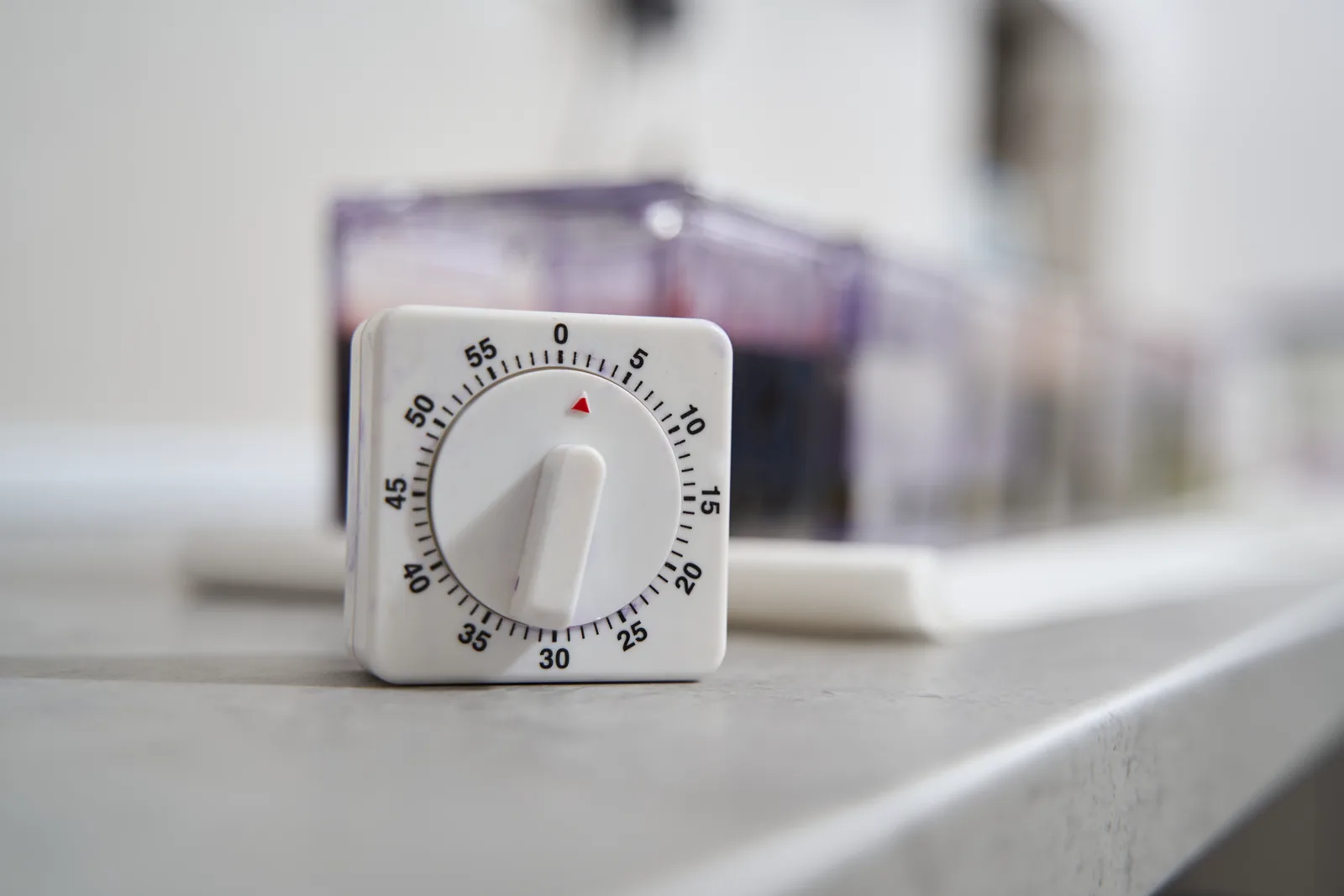
The version that works is the predictable one. A visible timer (egg timer or kitchen timer the toddler can see), a verbal warning at three minutes and one minute, then a clear transition activity ready to go ("when the timer beeps we're going to feed the dog"). The meltdown that follows abrupt removal isn't oppositional behavior; it's a developmentally normal response to an interrupted high-stimulation experience. The structure of the transition is doing most of the work.
What if my co-parent or grandparent doesn't agree with these limits?
This is one of the most common toddler-parenting friction points and rarely fixable in a single conversation. The approach that holds: share the actual AAP policy statement (not your opinion), pick one structural change at a time (no screens during meals is usually the easiest first ask), and acknowledge that occasional use isn't the concern (the typical-day pattern is). Coalition-build with the people already on board before trying to convert those who aren't. What happens at grandma's house is partly out of your control; it's not the typical day, and the typical day is where the research is concentrated.
Sources
- American Academy of Pediatrics, Council on Communications and Media. (2016). Media and Young Minds. Pediatrics, 138(5).
- Anderson, D. R., & Pempek, T. A. (2005). Television and very young children. American Behavioral Scientist, 48(5), 505-522.
- Christakis, D. A., Zimmerman, F. J., DiGiuseppe, D. L., & McCarty, C. A. (2004). Early television exposure and subsequent attentional problems in children. Pediatrics, 113(4), 708-713.
- Common Sense Media. (2020). The Common Sense Census: Media Use by Kids Age Zero to Eight.
- Hutton, J. S., Dudley, J., Horowitz-Kraus, T., DeWitt, T., & Holland, S. K. (2020). Associations between screen-based media use and brain white matter integrity in preschool-aged children. JAMA Pediatrics, 174(1).
- Kirkorian, H. L., Pempek, T. A., Murphy, L. A., Schmidt, M. E., & Anderson, D. R. (2009). The impact of background television on parent-child interaction. Child Development, 80(5), 1350-1359.
- Madigan, S., Browne, D., Racine, N., Mori, C., & Tough, S. (2019). Association between screen time and children's performance on a developmental screening test. JAMA Pediatrics, 173(3), 244-250.
- Madigan, S., McArthur, B. A., Anhorn, C., Eirich, R., & Christakis, D. A. (2020). Associations between screen use and child language skills: A systematic review and meta-analysis. JAMA Pediatrics, 174(7), 665-675.
- Tomopoulos, S., Dreyer, B. P., Berkule, S., Fierman, A. H., Brockmeyer, C., & Mendelsohn, A. L. (2010). Infant media exposure and toddler development. Archives of Pediatrics & Adolescent Medicine, 164(12), 1105-1111.
One last thing
The thing nobody says clearly enough in the toddler screen time conversation: this is the easiest version of this problem you will ever have. The window where a parent has near-total control over a child's screen environment closes faster than anyone expects. The toddler who watches what you watch becomes a 9-year-old who watches what their friends watch becomes a 14-year-old who watches what their algorithm serves them. The habits, the rituals, and the household defaults you build now are what the rest of it rests on. Background TV off, meals device-free, an hour of screens that everyone in the room is engaged with, and a lot of words, in both directions, all day. That's the whole guide.