The Tradition Builder
Pick a rhythm, what you want it to center on, and who it is for. The builder assembles a starter tradition with the three things that make one stick: a predictable trigger, a small role for each person, and a marker. Change any answer and the result updates.
The builder will generate a named starter tradition with the trigger, the roles, the marker, and a first step you can take this week.
A tradition is just a promise your family keeps to itself. It does not have to be big. It has to be kept.
What a family tradition actually is (and isn't)
A tradition is a small thing your family repeats on purpose, with enough meaning attached that skipping it would be felt. Two words are doing the work there. Repeated is what separates a tradition from a lovely one-off day. Meaning is what separates it from a routine.
Taco Tuesday is a routine until the week someone is away and the rest of you feel the gap. Then it is a tradition. The line between the two is not effort or expense; it is whether the thing has quietly become a thing. That is good news, because it means you do not have to manufacture significance. You repeat something, you keep showing up for it, and the meaning accrues on its own.
What a tradition is not: a performance, a Pinterest board, or a source of pressure. The traditions that collapse are almost always the over-engineered ones, the ones that demand a clear evening, a clean house, and everybody's good mood at once. The ones that last are usually unfussy and cheap and slightly silly.
Why traditions do more than feel nice
This is the part that surprises people. Family rituals are not just sentimental; they show up in the research as a protective factor. Barbara Fiese and colleagues reviewed fifty years of studies on family routines and rituals (2002) and found consistent associations with child health, academic performance, adolescent sense of identity, and even marital satisfaction. The effect is partly the predictability itself. A nervous system settles when it knows what is coming, and a child who knows that Friday means the same good thing has one more reliable thing in a world that often is not.
The most striking finding comes from Emory. Marshall Duke and Robyn Fivush developed a short questionnaire called the "Do You Know?" scale, which asks children how much they know about their family's history: where their grandparents grew up, how their parents met, the hard chapters as well as the proud ones. Children who scored higher knew more of the family story, and they also scored higher on self-esteem and resilience and lower on anxiety. The strongest version was what the researchers called the oscillating family narrative, the story that includes the setbacks and the recoveries, not just the highlight reel.
Traditions are one of the main delivery systems for that story. The repeated meal, the retold tale, the same trail walked every autumn are how a family's history gets handed down without anyone formally sitting the kids down to lecture them. The ritual carries the narrative.
The three ingredients that make a tradition stick
Most traditions that fizzle are missing one of these three. The builder above assembles all three for you, but here is what they are and why they matter.
A predictable trigger
A tradition needs a when that you do not have to decide each time. "Every Friday," "first snow," "the night before school starts," "Grandma's birthday." If the trigger is fixed, the tradition runs on autopilot. If it depends on someone remembering to schedule it, it dies the first busy month. Attach the ritual to a time or an event you cannot forget, and you remove the single biggest reason traditions lapse.
A small role for each person
People keep showing up for things they are part of. Give each person one job: the kid who lights the candle, the one who picks the music, the one who asks the question, the one who flips the pancakes. The roles can rotate, but a tradition where everyone is a passive attendee fades faster than one where each person has a thread they hold. This is also how you keep older kids in: hand them more of the running of it as they grow.
A marker that says this is the thing
A small signal that lifts the moment out of ordinary time: the special plate, the one song, the candle, the phrase everybody says, the photo in the same spot. The marker does not have to cost anything. It just has to be consistent, so that the brain learns to recognize it. Over years, the marker becomes shorthand for the whole feeling. The smell of those pancakes will mean something to your kids at forty.
A tradition only works if people show up for it
The quiet killer of family rituals is not a missing candle or a busy week. It is a table where everyone is half-watching a phone. The research on phone presence (Ward and colleagues, 2017) found that a visible phone reduces available attention even when no one is using it, and the parental-distraction studies link device use during family time to fewer warm exchanges. The fix is not nagging; it is making the ritual a phones-down pocket on purpose. Pax Gate is the mindful app blocker we built for exactly that. One small pause sits in front of the apps that pull people out of the room, so the tradition keeps the attention it depends on.
Join the Pax Gate waitlist The ritual you build is only as good as the presence in the room when it happens.Tradition ideas by rhythm
If the builder gave you a direction and you want more to borrow from, here is a stack organized by how often they happen. Steal freely. The best tradition is the one you will actually repeat.
Weekly (the workhorses)
- High-Low supper. Over one dinner a week, everyone shares the best and worst part of their day. Simple, and it teaches kids that both belong at the table.
- Friday game night. Same night, rotating game-picker. Let the youngest pick sometimes even if it means a fourth round of the easy one.
- Pancake Sunday. One slow breakfast with a fixed menu and no rush. The fixedness is the point.
- Screens-down hour. One evening hour with phones parked, candles or lamps on, and whatever quiet thing you each want to do in the same room.
Seasonal (the anchors)
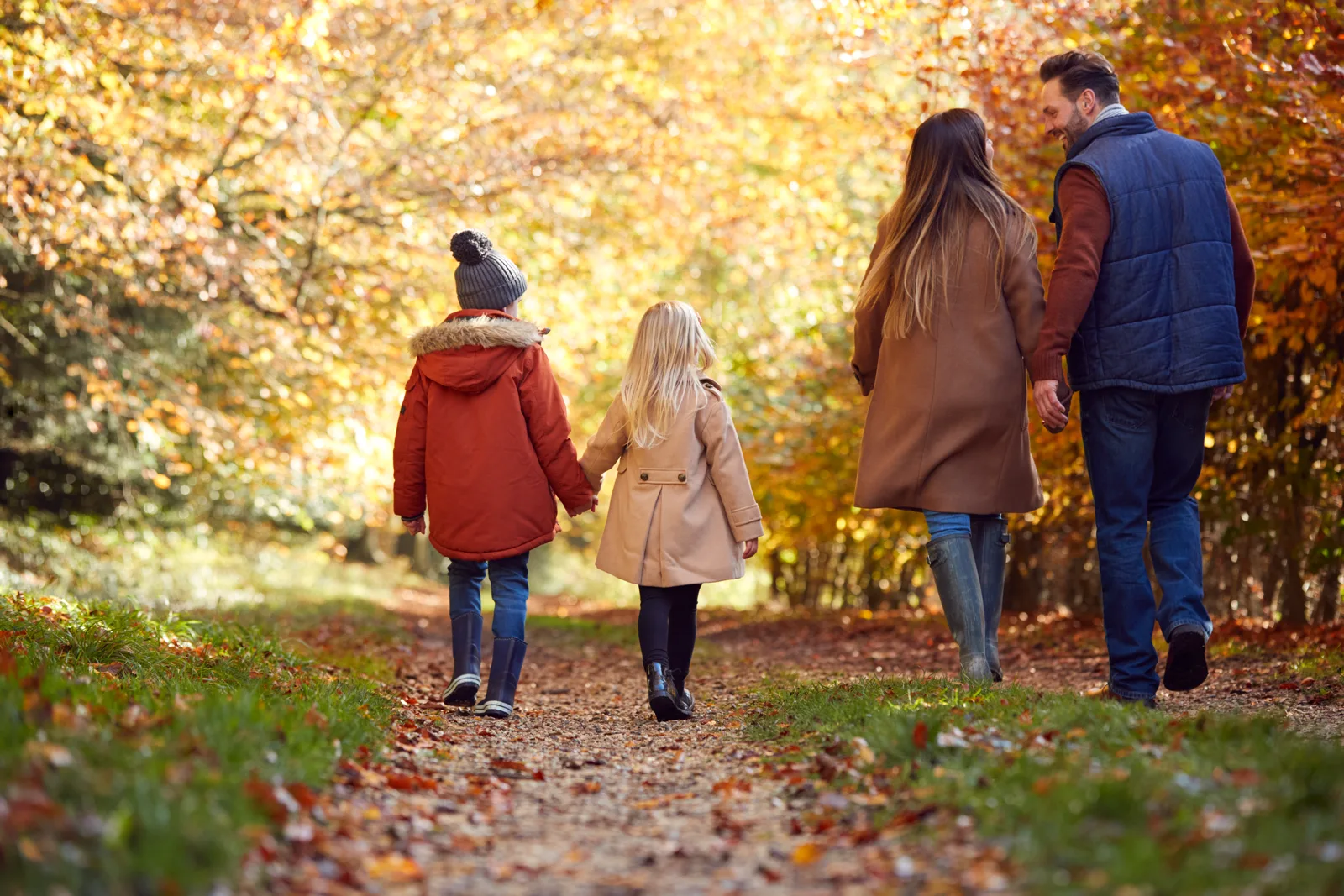
- First-snow walk (or first warm day, depending on where you live). Triggered by weather, which means you never have to schedule it.
- Same-spot photo. One picture in the exact same place each season or birthday. The series becomes a time-lapse of the whole family.
- Longest-night candles. On the winter solstice, light a candle each and say one thing you are letting go of and one you are carrying forward.
Yearly (the keepsakes)
- The birthday interview. Ask each kid the same handful of questions every year and record it. A two-minute clip that becomes priceless.
- Letter to next year. Each person writes a note to their future self, sealed and opened twelve months later.
- The story night. Once a year, the grandparents or the oldest generation tell one family story, including a hard one. This is the Duke and Fivush finding made into a ritual.
When a tradition starts to feel like an obligation
Here is the honest part. A tradition that everyone dreads has stopped doing its job, and forcing it does more harm than skipping it. This happens most often when the form outlives the family it was made for. The bedtime story that delighted a six year old is a chore for a fourteen year old, and demanding it anyway turns a warm thing into a battleground.
The move is not to abandon traditions when they get awkward; it is to let the form change while the thread stays. The bedtime story becomes the late-night kitchen chat. The family movie night lets the teen pick and invite a friend. The thread, time spent together on purpose, survives even as the shape shifts. Fiese's work suggests rituals matter most in adolescence, but only the ones that flex. If a tradition has become a source of friction for everyone, change it, shrink it, or retire it with thanks. A retired tradition is not a failure. It did its years.
The thing under the traditions is presence
Traditions are scaffolding for attention. If the harder part is actually being there when they happen, the companion guide on being present with your family has the small, specific moves that make the difference.
Read the being present guideRelated guides and tools
FAQ
What counts as a family tradition?
Any activity your family repeats on purpose, with enough meaning attached that its absence would be felt. The repetition separates a tradition from a one-off nice day; the meaning separates it from a routine. Taco Tuesday is a routine until someone would be sad to skip it, then it is a tradition. It does not need to be elaborate, expensive, or tied to a holiday. A specific walk, a Sunday phone call, a song at bedtime all qualify.
Why are family traditions important?
The research connects family rituals to measurable wellbeing. Fiese and colleagues reviewed fifty years of studies (2002) and found links to child health, adolescent identity, academic achievement, and marital satisfaction. Separately, Duke and Fivush at Emory found that children who knew more about their family's history, including the hard parts, scored higher on self-esteem and resilience and lower on anxiety. Traditions are a main way that history gets transmitted, and the predictability itself is regulating.
How do you start a family tradition?
Start absurdly small and repeat it before you formalize it. Pick something you already do, or could do in fifteen minutes, attach it to a fixed time or trigger, and do it three times. After the third time it starts to feel like a thing. Do not announce a grand new tradition on day one; that adds pressure that kills it. The three ingredients that make one stick are a predictable trigger, a small role for each person, and a marker. The builder above assembles those three for you.
What are some simple family tradition ideas?
Weekly: a high-low dinner, a Friday game night, a Sunday pancake breakfast, a screens-down hour. Seasonal: a first-snow walk, a same-spot photo each birthday, a solstice candle. Annual: a recorded birthday interview, a letter to your future selves opened next year, a story night where the oldest generation tells one family tale. The best traditions are small, repeatable, and cheap; elaborate ones tend to collapse under their own weight.
We are not a traditions kind of family. Can this still work?
Yes, and you probably have more traditions than you think; you just have not named them. The family that always gets the same takeout after a hard week has a tradition. The one with an inside joke they repeat every road trip has a tradition. You do not have to become a Pinterest family. Pick the lowest-effort idea, do it three times, and let it be unfussy. Traditions that try too hard are the ones that do not last.
How do you keep a tradition going when kids get older or life gets busy?
Give it room to evolve and give the older kids ownership. The version that works for a five year old will not survive a fifteen year old. Let the form change while the thread stays: the bedtime story becomes a late-night kitchen chat; the game night lets the teen pick and invite a friend. Rituals matter most in the teen years, but only if they flex. A tradition that becomes an obligation has stopped doing its work; change it or retire it.
Do family traditions have to be tied to holidays?
No, and the everyday ones may matter more. Holiday traditions are vivid but rare. The weekly and daily rituals are the ones a nervous system actually counts on, because they happen often enough to become a rhythm. Fiese's research distinguishes routines (frequent, functional) from rituals (meaningful, symbolic), and the families with the strongest outcomes tend to have both woven through ordinary weeks, not just concentrated on December.
How does phone use affect family traditions?
It quietly hollows them out. A tradition only works if people are present for it, and a table where everyone is half-watching a phone is a tradition in form but not function. Ward and colleagues (2017) found that a visible phone reduces available attention even when nobody uses it. The fix is making the ritual a phones-down pocket on purpose. Pax Gate, our mindful app blocker, can hold that pocket so the tradition keeps the attention it depends on.
Sources
- Fiese, B. H., Tomcho, T. J., Douglas, M., Josephs, K., Poltrock, S., & Baker, T. (2002). A review of 50 years of research on naturally occurring family routines and rituals: Cause for celebration? Journal of Family Psychology, 16(4).
- Fiese, B. H. (2006). Family Routines and Rituals. Yale University Press.
- Duke, M. P., Lazarus, A., & Fivush, R. (2008). Knowledge of family history as a clinically useful index of psychological wellbeing and prognosis: A brief report. Psychotherapy: Theory, Research, Practice, Training, 45(2).
- Fivush, R., Bohanek, J. G., & Duke, M. (2008). The intergenerational self: Subjective perspective and family history. In Individual and Collective Self-Continuity.
- Spagnola, M., & Fiese, B. H. (2007). Family routines and rituals: A context for development in the lives of young children. Infants & Young Children, 20(4).
- Ward, A. F., Duke, K., Gneezy, A., & Bos, M. W. (2017). Brain drain: The mere presence of one's own smartphone reduces available cognitive capacity. Journal of the Association for Consumer Research, 2(2).
One last thing
The reason traditions are worth the small effort is that they are how a family says, without saying it, this is who we are and you belong to it. You do not get that from a grand annual production. You get it from the hundredth ordinary Friday, the walk you have taken so many times the kids could lead it, the question you ask every birthday. Start one this week. Make it small enough that you cannot fail at it. Do it three times. Then let it grow into the thing your kids will, decades from now, do with their own families and not quite remember where it came from. That is the whole point. That is the tradition working.