
The Nightstand Kit Builder
Tick everything you currently use your phone for at night. The builder returns your personalized nightstand kit, one replacement per job, with the tool to find each one. Replace the jobs and the phone has nothing left to do in your bedroom.
Get the alarm clock first. Once your wake-up no longer depends on the phone, the whole switch becomes possible.
The phone stays on the nightstand because it is the only thing there doing its ten little jobs. Replace the jobs, and it becomes just another thing you can leave in the kitchen.
Why the phone on the nightstand is the whole problem
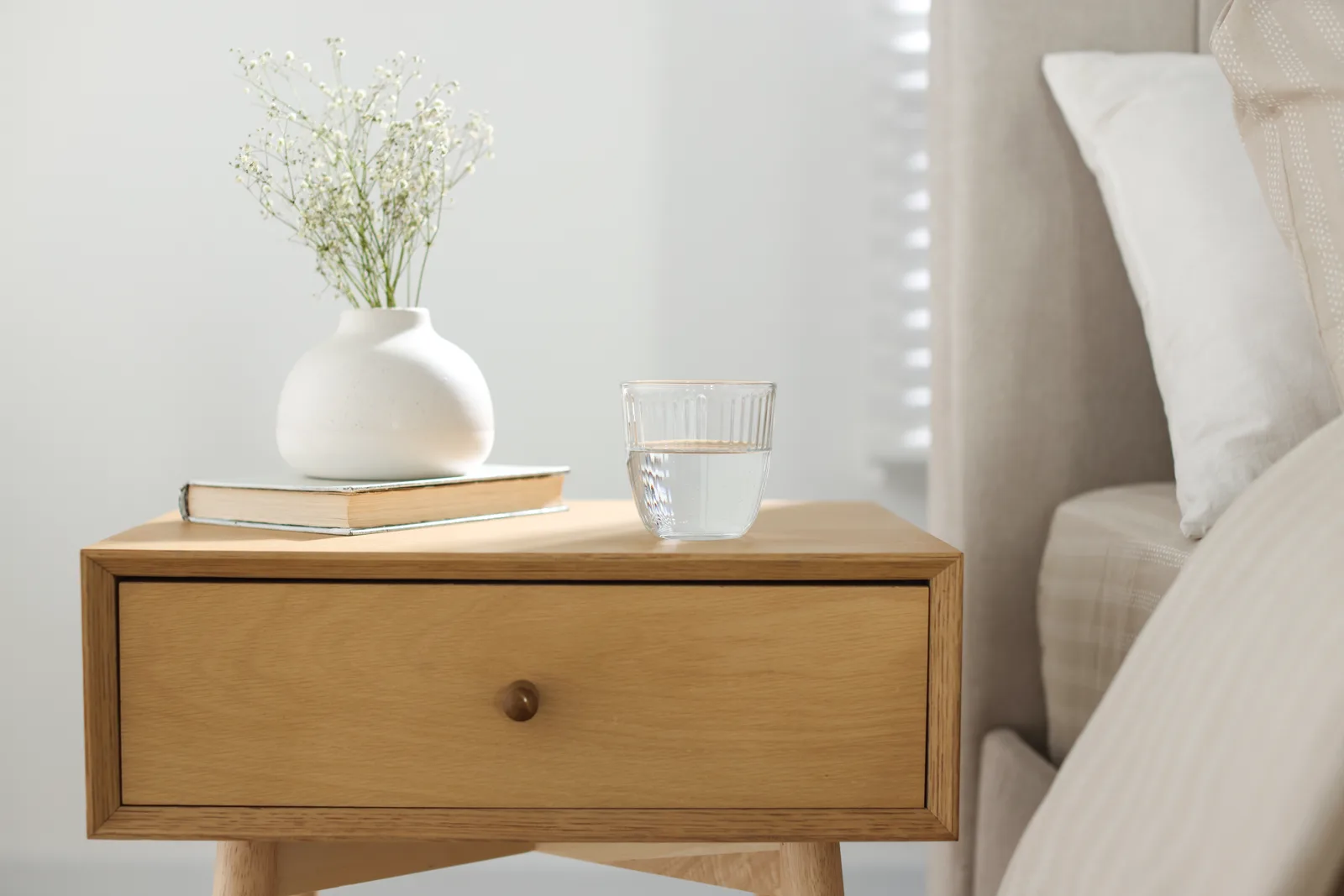
The nightstand is the phone's stronghold, and it holds it for a simple reason: it has quietly become a multi-tool. It is your alarm, your clock, your book, your white noise, your notepad, your flashlight, your last-thing-at-night and your first-thing-in-the-morning. Each of those is a legitimate job, and each one is also a doorway back to the feed. You pick it up to turn off the alarm and you are scrolling before your feet hit the floor.
That proximity is exactly the problem. The research on phone presence found that a phone within reach pulls attention even when you are not using it (Ward and colleagues, 2017), and sleep science is clear that your bed should be a cue for sleep and little else. A phone on the nightstand trains your brain, night after night, that bed is a place for wakeful engagement. The fix is not to grit your teeth and leave it there resisting; it is to make it redundant. Give every job it does to a dedicated object that does that one thing and nothing more, and the phone loses its reason to be there.
The replacements, one job at a time
If you would rather read than build, here is the full map of phone job to better object. The Kit Builder above assembles just the ones you need.
Alarm and waking up → a standalone alarm clock
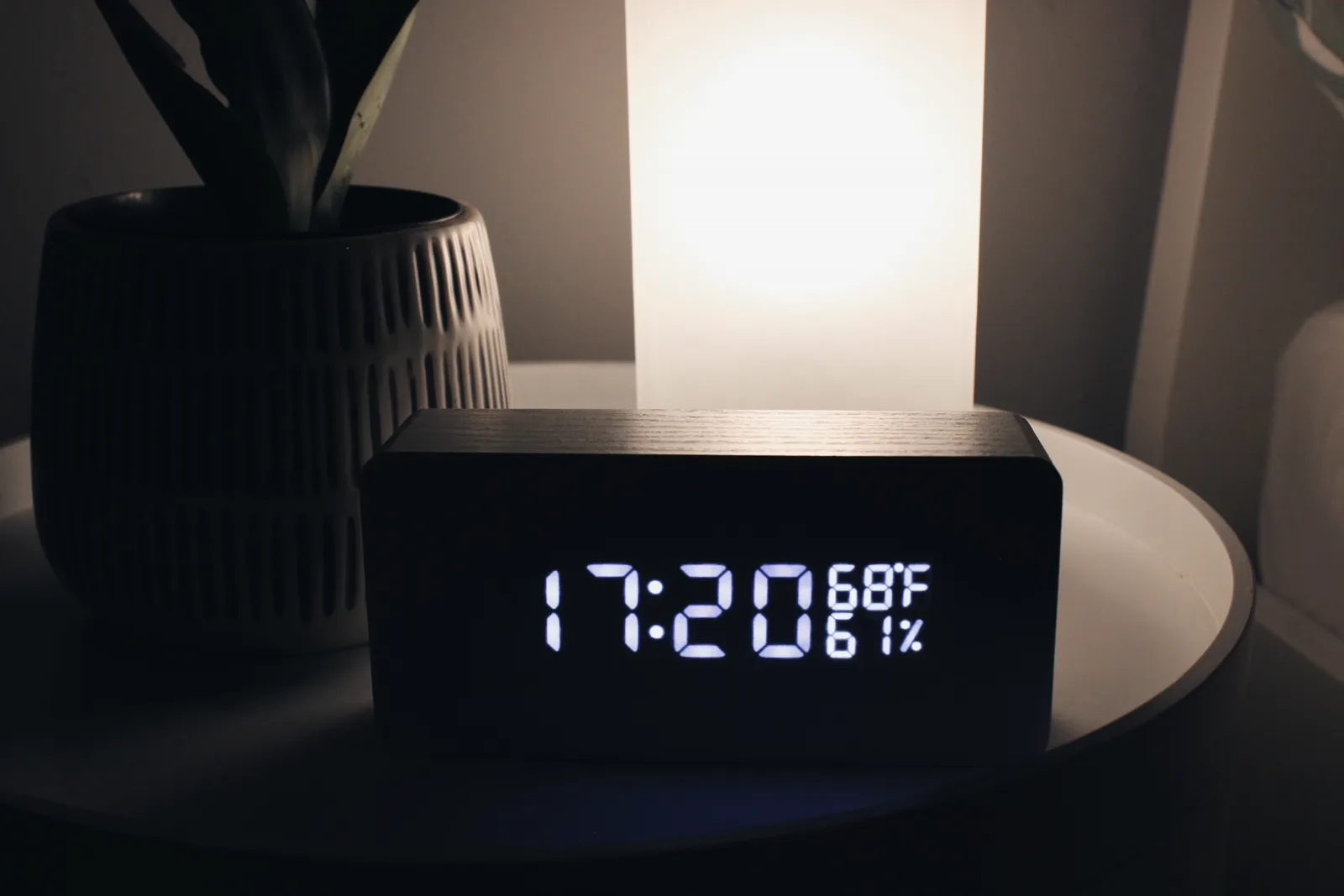
The number-one excuse for keeping the phone in bed, and the easiest to remove. A cheap digital clock, or a gentle sunrise alarm that wakes you with light. The Bedside Phone Replacement Finder matches one to you.
Reading in bed → a paper book or a warm-lit e-reader
A book emits no light and cannot notify you. An e-reader with warm front-lighting lights the page, not your eyes, and runs no apps. The E-Reader Finder helps you choose.
White noise or sleep sounds → a dedicated sound machine
A sound machine does the one job beautifully and never tempts you to check anything. The White Noise & Sound Machine Finder matches the sound and features you want.
Checking the time → a simple clock
A dim, non-blue clock display, ideally one you glance at only when needed rather than clock-watch. Any dedicated clock beats a phone, because it will not pull you into twenty minutes of scrolling.
Capturing thoughts → a notebook and pen
The 2am idea or worry that makes you unlock the phone. A pad and pen catch it just as well and let you put it down without opening anything.
Listening for a baby → a dedicated baby monitor
A real monitor does the listening without bringing the internet to your nightstand. The Baby Monitor & Parent Sleep Setup Finder covers setups built to protect a parent's own sleep.
A light in the dark → a dim lamp or nightlight
For the trip to the bathroom or the last page of a chapter, a warm, dim bedside lamp or nightlight, rather than the phone's flashlight, which wakes you up more than it needs to.
Comfort and not feeling alone → a book, a journal, calm audio
The honest one. If the phone is company at night, replace it with gentler company: a chapter, a few grateful lines in a journal, or quiet audio, none of which leave you more wired than before.
For the jobs you cannot fully hand off yet
Sometimes the phone still has to be nearby, for an on-call shift, a monitor, a partner who travels. When it is, the risk is that "nearby for emergencies" quietly becomes "available for the feed." Pax Gate is a mindful app blocker that keeps the phone reachable for what matters while putting a pause in front of the apps that steal your night. So it can sit on the nightstand doing only the jobs you actually need, and nothing more.
Join the Pax Gate waitlist Reachable for the few things that matter, gated from the feed that does not.How to actually make the switch
A new nightstand kit only helps if you set it up so the phone-free night is the easy one. A few practical steps:
- Buy the alarm clock first. This one purchase removes the main excuse. Until your wake-up is off the phone, nothing else will stick.
- Set a charging spot outside the bedroom. The hallway, the kitchen, anywhere but arm's reach. The walk to fetch it in the morning is a feature, not a bug.
- Stock the kit before you need it. The book on the nightstand, the notebook open, the sound machine plugged in. In the moment your tired brain reaches for the easiest thing, so make the easiest thing the right one.
- Give it two weeks. The first few nights feel strange because the reflex is strong. By the second week, most people sleep noticeably better and do not miss the phone at all.
Not sure which sleep products you actually need?
The Sleep Improvement Finder takes your specific sleep problem and matches the products and changes most likely to fix it, from alarm clocks to sound machines to light setups.
Open the Sleep Improvement FinderRelated guides and tools
FAQ
What should I put on my nightstand instead of my phone?
Replace it job by job, because it is doing several at once. A standalone alarm clock handles waking and the time. A paper book or warm-lit e-reader handles reading. A dedicated sound machine handles white noise. A notebook and pen handle capturing thoughts. A dim lamp handles the flashlight. And if you have young children, a dedicated baby monitor handles listening. A phone-free nightstand only works if you replace every job, otherwise the gap brings the phone back. The Kit Builder above assembles your list.
What can I use as an alarm instead of my phone?
A standalone alarm clock, the single most important nightstand item for getting the phone out. It removes the "but I use it as my alarm" excuse entirely. Options include a simple digital clock, a sunrise alarm that wakes you gently with light, or an analog clock with no glow. Sunrise alarms are especially worth it, since they wake you more gently than a beep and help on dark mornings. The Bedside Phone Replacement Finder can match one to your preferences and budget.
How do I check the time at night without my phone?
A clock on the nightstand, ideally with a dim, non-blue display. A caution though: clock-watching in the night is a known driver of sleep anxiety, so the best setups let you check only when you truly need to. Some people prefer an analog clock or one they have to turn to see, precisely so they are not watching the minutes at 3am. A dedicated clock is still far better than a phone, because it does one job and does not tempt you into scrolling.
What should I read in bed instead of scrolling?
A paper book is the gold standard: no light, no notifications, no doorway to anything but the story. If you prefer digital, a dedicated e-reader with warm, adjustable front-lighting is next best, lighting the page rather than your eyes, running no apps. Avoid reading on a phone or tablet, which combines bright blue-heavy light with a device one swipe from everything else. Choose calming material over anything gripping enough to keep you chasing the next chapter.
Do I really need to keep my phone out of the bedroom?
You do not have to, but it is by far the most effective single change, because it removes the temptation instead of asking you to resist it half-asleep. The research shows a phone within reach pulls attention even unused, and stimulus-control principles say your bed should cue sleep, not engagement. If a phone-free bedroom is not possible (on-call work, a baby monitor), the goal shifts to putting it across the room and replacing its other jobs so there is less reason to reach for it. The Kit Builder helps with that middle path too.
What do I do about the baby monitor or needing to be reachable?
These are the two most legitimate reasons to keep a phone nearby, and both have clean solutions. For a baby, a dedicated monitor does the listening without bringing the internet to your nightstand, and there are setups built to protect a parent's own sleep. For genuine on-call needs, configure the phone so only real emergency contacts get through (do-not-disturb with allowed callers) and place it across the room. The goal is not to be unreachable; it is to be reachable for the few things that matter without being available to the feed all night.
Sources
- Ward, A. F., Duke, K., Gneezy, A., & Bos, M. W. (2017). Brain drain: The mere presence of one's own smartphone reduces available cognitive capacity. Journal of the Association for Consumer Research, 2(2).
- Exelmans, L., & Van den Bulck, J. (2016). Bedtime mobile phone use and sleep in adults. Social Science & Medicine, 148.
- Chang, A. M., et al. (2015). Evening use of light-emitting eReaders negatively affects sleep, circadian timing, and next-morning alertness. Proceedings of the National Academy of Sciences, 112(4).
- Bootzin, R. R., & Epstein, D. R. (2011). Understanding and treating insomnia. Annual Review of Clinical Psychology, 7. (On stimulus control and the bed-as-sleep-cue principle.)
One last thing
The reason "just keep your phone out of the bedroom" so rarely works is that it is only half an instruction. Removing the phone leaves ten small holes, and holes get filled by whatever is easiest, which is the phone, right back where it was. The trick is to fill the holes first. Build the kit, get the alarm clock, stock the nightstand with the better options, and then removing the phone is not an act of willpower at all. It is just tidying up, taking the thing that no longer has a job there and leaving it in the kitchen where it belongs.