The Caffeine Load Calculator
Total your daily intake across sources. Adjust for individual sensitivity (the "what does coffee feel like" question is a rough proxy for the CYP1A2 enzyme variant that determines whether you're a fast or slow metabolizer). The output shows your effective load and a specific reduction plan if one's warranted.
Most people who suspect caffeine is making them anxious are right. They're just usually wrong about the dose. The hiding sources are where the math goes off.
Yes, here's exactly how
Caffeine produces anxiety through two main mechanisms. Both are well-documented, and the combined effect is larger than either alone.
The adenosine block
Adenosine is a neurotransmitter that builds up in the brain throughout the day. As it accumulates, it signals tiredness and slows neuronal activity. Caffeine is structurally similar to adenosine and binds to adenosine receptors without activating them, blocking the actual adenosine from doing its job. Translation: caffeine doesn't add energy, it removes the "tiredness" signal. The result feels like alertness; biologically, it's the absence of a brake.
Without that brake, neurons fire more freely. Dopamine, norepinephrine, and glutamate all increase. For most people, this lands as helpful focus. For people whose nervous system is already on the activated side, it lands as anxiety. Same caffeine, different baseline.
The sympathetic nervous system bump
Caffeine directly stimulates the sympathetic nervous system. Heart rate goes up. Blood pressure rises modestly. Cortisol increases (especially in the morning, where it stacks with the natural cortisol awakening response). All of these are the physical signature of anxiety. A person who is moderately caffeinated has a heart rate, cortisol level, and respiratory rate that matches a person who is moderately anxious. The brain reads physiology. When the physiology says "anxious," the brain often confirms the assessment.
This is why caffeine can cause anxiety in people who don't even feel particularly stressed. The body is producing the anxiety physiology directly. The mind catches up later.
Why some people get more anxiety from less caffeine
The dose-response curve for caffeine and anxiety isn't a single line. It's a family of curves that vary substantially by individual. Four factors do most of the work.
CYP1A2 genetic variation
The CYP1A2 enzyme in the liver metabolizes caffeine. The gene that codes for it has two main variants. "Fast metabolizers" clear caffeine quickly; their half-life can be as short as 3 to 4 hours. "Slow metabolizers" clear caffeine slowly; their half-life can be 8 to 10 hours. The difference in caffeine clearance rate between the slowest and fastest metabolizers is roughly 40x. Translation: the same 200mg cup of coffee can produce a 2-hour effect in one person and a 12-hour effect in another.
Cornelis et al. (2006) documented the CYP1A2 effect in a study on caffeine and heart attack risk. Subsequent work has shown the same variant strongly predicts anxiety response, sleep disruption, and overall caffeine tolerance. The studies typically can't measure CYP1A2 directly outside a lab, which is why the calculator above uses "what does coffee feel like" as a rough proxy. People who report feeling jittery or anxious from average doses are usually the slow metabolizers. People who report feeling almost nothing are usually the fast metabolizers, though tolerance is a confound.
Tolerance and the down-regulation problem
With regular caffeine use, the brain down-regulates adenosine receptors to compensate for the chronic blockade. This produces tolerance; the same dose feels like less. It also means that if you don't have caffeine, the now-elevated number of adenosine receptors produces stronger tiredness than baseline. This is the withdrawal headache. The relevant point for anxiety: tolerance to the alertness effect develops faster than tolerance to the sympathetic nervous system effect. So heavy long-term users still get the heart-rate and cortisol bump from caffeine; they just don't feel as alert from it. The result is a wired-but-tired state that often reads as anxiety.
Body weight, age, and medications
Caffeine effect scales roughly with body weight. A 100-pound person and a 200-pound person have very different responses to the same dose. Older adults metabolize caffeine more slowly than younger adults. Pregnancy slows caffeine metabolism by roughly 50% in the third trimester. Hormonal birth control roughly doubles caffeine half-life. SSRIs (often used for anxiety, ironically) can also slow caffeine metabolism. Smoking speeds it up (which is why former smokers often suddenly become more caffeine-sensitive). The dose that worked last year doesn't necessarily work this year if any of these have changed.
Baseline anxiety and history
If you already have an anxiety disorder, caffeine effects are amplified. The caffeine challenge test, where 480mg of caffeine is given to subjects, reliably produces panic attacks in roughly half of people with panic disorder and almost none of controls (Vilarim et al. 2011). The DSM-5 formally recognizes Caffeine-Induced Anxiety Disorder as a distinct diagnosis. For people with a panic or general anxiety history, the threshold for caffeine-induced symptoms is dramatically lower than for the general population.
The sources people miss
If the calculator returned a lower number than you expected based on how you feel, the issue is usually unaccounted sources. The major ones:
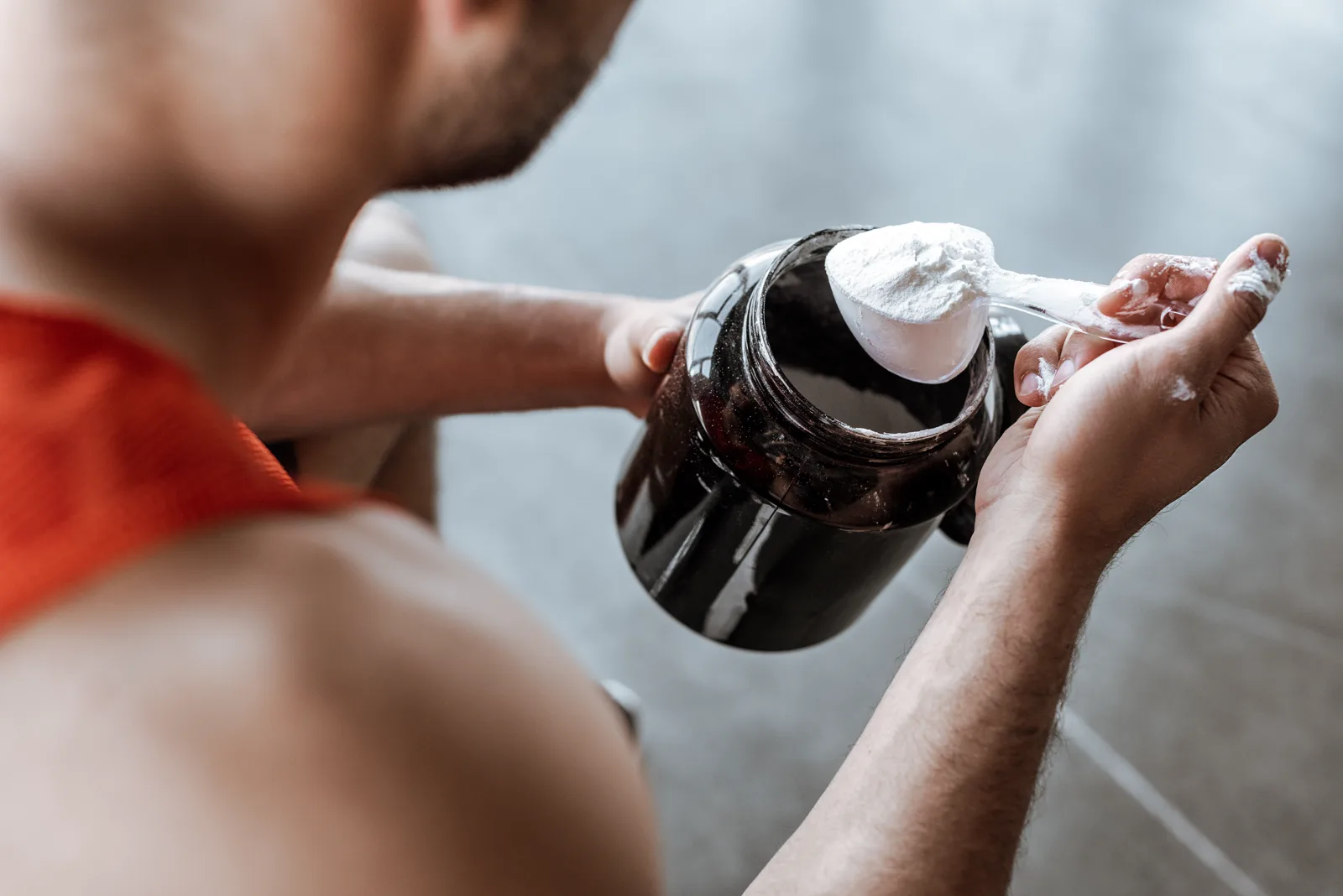
Pre-workout and gym supplements
A serving of typical pre-workout has 150 to 350mg of caffeine. That's more than two cups of coffee in one scoop. Many people use pre-workout multiple times a week and don't count it as caffeine in their daily total. If you train at 5 PM with pre-workout, you're effectively double-dosing your afternoon coffee.
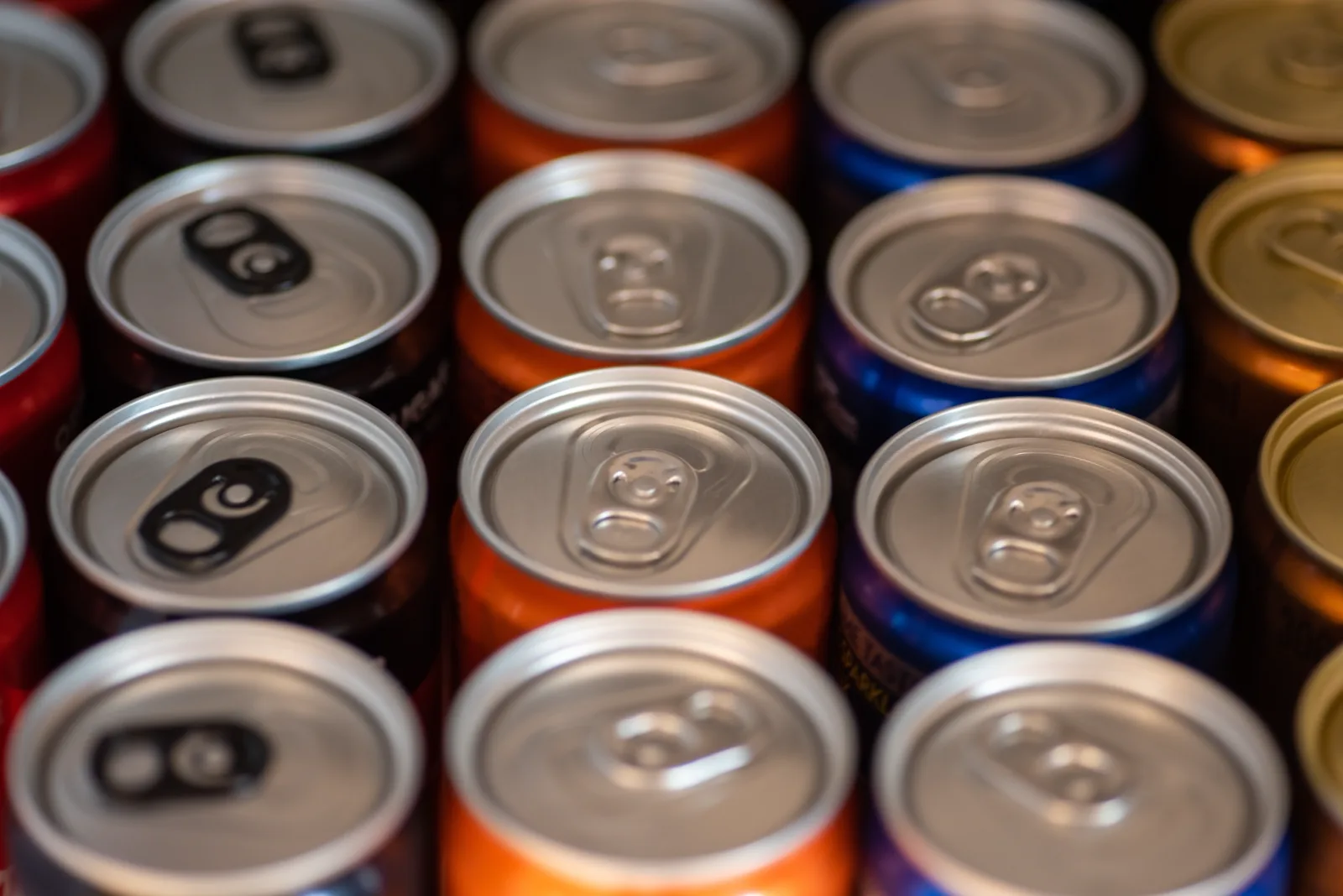
Energy drinks
A 16-ounce energy drink typically contains 150 to 200mg of caffeine. A 32-ounce contains 300 to 400mg. The "energy" label captures the marketing claim; the caffeine label is often in small print on the back. Many adults treat energy drinks as functional beverages and don't count them. They're caffeine delivery vehicles.
Caffeinated soda
Coca-Cola: 34mg per 12 oz can. Diet Coke: 46mg. Mountain Dew: 54mg. Dr Pepper: 41mg. Pepsi: 38mg. A daily Diet Coke or two adds 90mg of caffeine to whatever else you're drinking, and it tends to be consumed later in the day than coffee.
Tea
Black tea: 47mg per 8 oz cup. Green tea: 28mg. Matcha: 70mg per teaspoon (matcha is concentrated, so a serving has substantially more). White tea: 15mg. The "tea is calming" narrative is partly true (L-theanine, present in tea, does counterbalance some of caffeine's stimulant effects), but the caffeine is still there. Three cups of black tea is roughly equivalent to one cup of coffee.
OTC headache medications
Excedrin: 65mg per dose. Anacin: 32mg per dose. Some sinus and cold medications: 30 to 60mg. Caffeine is added to these because it potentiates the analgesic effect, but it does the caffeine thing while doing the headache thing. If you've taken Excedrin in the afternoon and can't sleep that night, the caffeine is why.
Dark chocolate
Dark chocolate has roughly 12mg of caffeine per ounce (a typical small square). A standard 3-ounce dark chocolate bar has 35 to 50mg of caffeine. The dessert that's "just chocolate" is not just chocolate if you're already at your daily ceiling.
The cutoff time math
The half-life of caffeine in average adults is 5 to 7 hours. Full clearance is 10 to 12 hours. For slow metabolizers (the same people most likely to have caffeine-induced anxiety), the half-life can be 8 to 10 hours and full clearance 16+. What this means in practice:
- A 3 PM coffee (200mg) is roughly 100mg at 9 PM and 50mg at 3 AM for an average metabolizer. For a slow metabolizer, it's roughly 150mg at 9 PM and 75mg at 3 AM. That's not a trace amount; that's the equivalent of a fresh cup of coffee actively in your system at bedtime.
- The general rule that holds up in the research: no caffeine within 8 hours of intended sleep time for most people; within 10 hours for slow metabolizers. If you sleep at 10 PM, the cutoff is 2 PM for most adults and noon for slow metabolizers.
- The morning-stacks-better rule. Two cups of coffee at 7 AM and 10 AM are dramatically lower-impact on sleep and anxiety than one cup at 7 AM and one at 2 PM, even though the total is the same.
If you're getting 3 AM wake-ups and you're a regular afternoon coffee drinker, this is the cheapest experiment in the article. Move all caffeine to the morning for one week. See what happens to your sleep, then read the rest of this guide.
How to reduce without the withdrawal headache
Caffeine withdrawal is real and underrated. The typical pattern: headache (often severe), fatigue, low mood, low motivation, irritability, and (annoyingly) more anxiety for 2 to 7 days. This is why most quit-caffeine attempts fail in the first week. The technique that works is taper, not stop.
- Reduce by 25% per week. If you're at 400mg, drop to 300 the first week, 225 the second, 170 the third, 125 the fourth. Most people don't experience significant withdrawal at this rate.
- Cut the afternoon first. The afternoon caffeine is the highest-leverage cut regardless of total dose, because it's the cup that's still in your system at bedtime. Sleep improvements from this cut show up within days.
- Switch some cups to half-caf. Easier than measuring; just keep half-caf grounds in the kitchen and use them for the second cup.
- Replace, don't subtract. A morning ritual built around coffee that suddenly has no coffee feels broken. The cup of tea, the herbal cup, the warm water with lemon, all of them maintain the ritual structure while the caffeine drops.
- Watch for the hidden sources. Cutting one cup of coffee but adding two diet sodas doesn't reduce caffeine; it shifts it.
The other lever for the anxious morning
Most adults who suspect caffeine is fueling anxiety also have a phone habit that's doing the same job. The morning scroll. The doomscroll at lunch. The 11 PM social media spiral. Pax Gate is a mindful app blocker built around a different idea than most. Instead of a hard lockout, it puts one small pause in front of the apps you reach for unconsciously. The pause turns into a gratitude prompt, a quick reflection, or a mood check. Three seconds, not a fight. The combined effect of less caffeine and less doomscroll is larger than either alone.
Join the Pax Gate waitlist Caffeine and the phone are the two biggest sympathetic activators in the average modern day. Both respond to small structural changes.If anxiety is keeping you up at night
The companion guide. A 3 AM toolkit with evidence-based grounding techniques you can do in bed, the research on why nights are different, and the structural fixes that hold.
Read the night anxiety guideWhen to talk to a doctor
For most adults, caffeine reduction is a self-management question. A few patterns are worth bringing to a primary care or therapist visit instead:
- If you have a history of panic disorder and your anxiety has gotten worse, the caffeine-panic relationship is well-documented and worth professional attention rather than just a calculator.
- If you've reduced caffeine to a low level and the anxiety hasn't shifted after a few weeks, caffeine probably wasn't the main driver. Worth talking through what else might be.
- If you're using caffeine to compensate for ongoing severe fatigue, the fatigue is the thing to investigate, not the caffeine.
- If reducing caffeine produces a severe withdrawal that doesn't resolve within 1 to 2 weeks, that's worth a doctor visit too.
Related guides and tools
FAQ
Can caffeine cause anxiety?
Yes. Caffeine is a sympathetic nervous system stimulant that increases heart rate, blood pressure, and cortisol, all of which mimic and amplify anxiety physiology. The American Psychiatric Association recognizes Caffeine-Induced Anxiety Disorder as a distinct DSM diagnosis. For most healthy adults, the threshold where caffeine begins reliably producing anxiety is around 400mg per day, but for genetically sensitive people, symptoms can show up at 100 to 200mg.
How much caffeine causes anxiety?
The FDA's general safety cap is 400mg per day; the dose where caffeine begins reliably producing anxiety in average users is around that same threshold, with substantial individual variation. CYP1A2 enzyme variants determine fast versus slow metabolism, with the slowest metabolizers producing anxiety at 100 to 200mg. The calculator above adjusts for this. There isn't a single dose; there's a dose for your specific body.
How long does caffeine stay in your system?
Half-life of 5 to 7 hours in average adults, full clearance 10 to 12 hours. Half of your 3 PM coffee is still working at 9 PM. Half of that half is still working at 3 AM. For slow metabolizers, the half-life can stretch to 8 to 10 hours. The afternoon coffee you don't notice is part of the 3 AM wake-up for many adults.
Why does coffee make me anxious all of a sudden?
A few possibilities. Tolerance reset from worse sleep or higher stress. New sources you added (a pre-workout, an energy drink, a stronger brewer). Real biological change (pregnancy, certain medications including SSRIs and birth control pills slow caffeine clearance significantly). Or anxiety developing independently and caffeine just making it more obvious. Same coffee, different body.
What's the best way to reduce caffeine without withdrawal?
Taper, don't quit. 25% reduction per week is gentle enough that most people don't experience significant withdrawal. Cut the afternoon first (highest-leverage move for sleep regardless of total dose). Use half-caf. Replace, don't subtract (keep the ritual, change the cup). Watch for hidden sources so you don't accidentally re-add what you cut.
Does decaf coffee cause anxiety?
Decaf contains 2 to 15mg of caffeine per cup, so for genuinely sensitive people, even decaf can contribute. The larger driver: decaf is still coffee, with chlorogenic acid and other compounds that can mildly stimulate cortisol and stomach acid. For most people, decaf is safe and a useful reduction tool. For people whose symptoms reproduce on decaf, herbal tea (chamomile, rooibos, mint) usually resolves it.
What about caffeine and panic attacks?
Caffeine is a documented panic trigger. The caffeine challenge test (480mg given to subjects) reliably produces panic attacks in about half of patients with panic disorder and almost none of controls (Vilarim et al. 2011). If you have a history of panic, caution with caffeine is warranted, especially with larger or unfamiliar doses. Many people with panic disorder find caffeine reduction the single highest-leverage intervention.
What caffeine sources do people miss?
Pre-workout (150 to 350mg per serving). Energy drinks (150 to 300mg per can). Caffeinated soda (Coke 34mg, Diet Coke 46mg, Mountain Dew 54mg). Dark chocolate (12mg per ounce). Black tea (47mg per cup). Green tea (28mg). Excedrin (65mg per dose). Many people miss 100 to 200mg of daily intake from these.
Sources
- American Psychiatric Association. (2013). Diagnostic and Statistical Manual of Mental Disorders (5th ed.). Section on Caffeine-Induced Anxiety Disorder.
- Cornelis, M. C., El-Sohemy, A., Kabagambe, E. K., & Campos, H. (2006). Coffee, CYP1A2 genotype, and risk of myocardial infarction. JAMA, 295(10).
- FDA. (2018). Spilling the Beans: How Much Caffeine is Too Much?
- Lara, D. R. (2010). Caffeine, mental health, and psychiatric disorders. Journal of Alzheimer's Disease, 20(S1).
- Roehrs, T., & Roth, T. (2008). Caffeine: sleep and daytime sleepiness. Sleep Medicine Reviews, 12(2).
- Smith, A. (2002). Effects of caffeine on human behavior. Food and Chemical Toxicology, 40(9).
- Vilarim, M. M., Rocha Araujo, D. M., & Nardi, A. E. (2011). Caffeine challenge test and panic disorder: a systematic literature review. Expert Review of Neurotherapeutics, 11(8).
- Yang, A., Palmer, A. A., & de Wit, H. (2010). Genetics of caffeine consumption and responses to caffeine. Psychopharmacology, 211(3).
One last thing
Caffeine is one of the cleaner experiments available in the whole anxiety toolkit. Unlike most lifestyle interventions, the effect is fast (days, not weeks), the variable is easy to control (you can measure your intake to the milligram), and the response is usually obvious (sleep changes, anxiety changes, both shift visibly). If the calculator above came back with a number that's higher than you thought, or if you recognized a source you weren't counting, that's the experiment. Drop it 25% for a week. See what shifts. Compared to most things this guide could suggest, this one's almost free to run, and the data you'll get is yours specifically, not an average.