
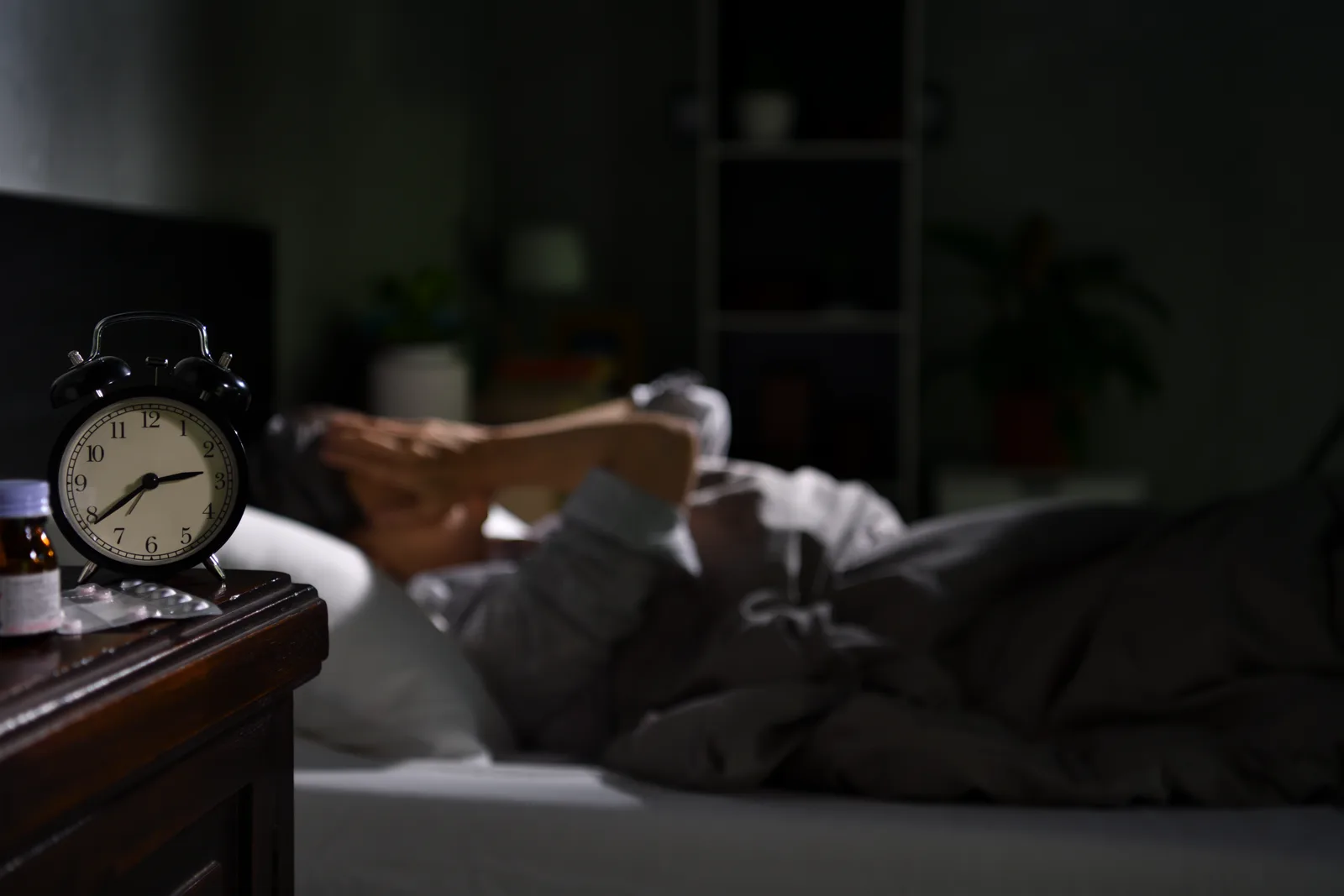
The Break-the-Loop Coach
Pick where you are caught in the loop right now. The coach returns a specific circuit-breaker, a line to steady yourself with, and why it works. These are in-the-moment moves for the actual 3am, not a long-term plan.
Your 3am brain is not lying to you on purpose. It is just tired, and a tired brain makes every worry look twice its size. Do not hand it a phone. Hand it a breath.
The loop: how the phone and night anxiety feed each other
It runs in both directions, which is what makes it so sticky. In one direction, anxiety drives the phone: the lights go out, the day's distractions vanish, and your mind fills the silence with worry. The phone offers instant escape, so you reach for it, almost without deciding to. In the other direction, the phone drives the anxiety: the content is activating, the light delays sleep, and the escape numbs the feeling without resolving it, so the worry waits, now on top of a more wired nervous system.
Then the loop closes. The lost and fragmented sleep is not neutral; sleep loss itself amplifies anxiety. Research by Yoo, Walker and colleagues (2007) found that a sleep-deprived brain has a more reactive amygdala, the emotional alarm system, and a weaker connection to the regions that normally keep it in check. So a bad night makes the next day's anxiety worse, which makes the next night's harder, and the phone is usually accelerating the whole cycle. The good news is that a loop only needs one link broken to start unwinding, and there are two links that are much easier to break than the rest.
Why the phone makes an anxious night so much worse
It is worth being precise about why the phone is such a poor choice for anxiety at night specifically, because in the moment it feels like the obvious comfort.
- It raises arousal when you need it lowered. Anxiety is already a high-arousal state, and sleep requires arousal to fall. The stimulating content, the notifications, the infinite input, all push arousal up, which is the exact wrong direction.
- It feeds the worry directly. News, comparison, and the argument in the comments do not soothe an anxious mind; they hand it more to be anxious about, at the worst possible hour to process any of it.
- The light delays sleep, which deepens the sleep debt that is amplifying the anxiety in the first place.
- It trains the bed as a place for wakeful distress. Every anxious night spent scrolling in bed teaches your brain that bed is where you lie awake and upset, which makes falling asleep there harder over time.
The phone reach is a reflex. A pause makes it a choice
When anxiety spikes at night, the reach for the phone happens before you decide to, which is exactly why "just do not check it" fails. Pax Gate is a mindful app blocker that puts a small pause in front of the apps you open on autopilot, so the anxious 3am reach meets a breath and a choice instead of an open feed. In that pause, you get the one thing anxiety steals: a moment to choose the thing that actually calms you rather than the thing that just numbs and winds you up.
Join the Pax Gate waitlist A breath between the anxiety and the feed, at the hour you need it most.The circuit-breakers that actually work
The coach hands you the one that fits your moment. Here is the wider set it draws from, all better choices than the phone.
Breathe, longer on the out
The fastest way to lower a spiking nervous system is the exhale. Try a physiological sigh: two inhales through the nose (a big one, then a small top-up), then a long, slow exhale through the mouth. A few rounds. Research (Balban and colleagues, 2023) found this kind of cyclic sighing reduced anxiety more than other breathing patterns. It is the opposite of what the phone does to your arousal.
Get the worry out of your head, earlier
Much night anxiety is unprocessed daytime worry surfacing in the quiet. A worry brain-dump in the early evening, everything on your mind onto paper, and a note of the next tiny action for each, tells your brain the loops have been seen so it does not have to keep raising them at 2am.
If you have been awake more than 20 minutes, get up
Lying in bed anxious teaches your brain that bed means wakefulness. Sleep science calls the fix stimulus control: if you are wide awake and distressed, get up, sit somewhere dim and quiet with a boring book or nothing at all, and return only when you feel sleepy. Leave the phone where it is.
Give the anxious mind gentler company
If you need something to occupy your mind away from the worry, make it low-stimulation: a sound machine, quiet music, a body scan, a boring book. The goal is to give the anxiety somewhere soft to land, not to jolt it further awake. A sound machine is one of the most reliable non-phone comforts there is.
When night anxiety needs more than a circuit-breaker
These moves help almost everyone get through a hard night, but they are tools for the moment, not treatment for an underlying condition. If night anxiety is a near-nightly visitor, if it comes with panic, dread, or a mind you genuinely cannot settle, or if it sits alongside low mood, hopelessness, or insomnia that does not lift, that is worth taking to a doctor or a mental health professional. Chronic anxiety and insomnia are common, treatable, and not something you should have to white-knuckle alone at 3am indefinitely.
Nothing in this guide is medical advice, and the phone fixes here, real as they are, will not resolve a clinical anxiety disorder on their own. Think of getting the phone out of the loop as clearing one obstacle so the real help can work better, not as a replacement for it. If the nights are frightening or relentless, please reach for a person, not just a technique.
Go deeper on the 3am toolkit
This guide is about the phone-anxiety loop specifically. For the broader set of evidence-based techniques for anxiety that hits in the middle of the night, the companion guide is a full 3am toolkit with a diagnostic.
Read the anxiety at night guideRelated guides and tools
FAQ
Why do I get anxious at night and reach for my phone?
Because night removes the distractions that keep anxiety at bay by day, and the phone is the fastest way to bring one back. When the world goes quiet, there is nothing between you and your own mind, so worries surface, and the phone offers instant escape, which is why the reach feels automatic. The problem is that it is escape, not relief: it numbs the feeling without resolving it, while the light and content raise your arousal, so you end up more wired and no less anxious. The reach makes sense; it just does not work.
Does looking at my phone make anxiety worse at night?
Usually yes, in several ways at once. The content is activating, raising mental arousal when you need it to fall. The light can suppress melatonin and delay sleep, and lost sleep amplifies emotional reactivity, since a sleep-deprived brain has a more reactive amygdala (Yoo, Walker and colleagues, 2007). So the phone you reached for to calm the anxiety tends to feed it: more arousal, worse sleep, and a harder next day, which makes the following night worse. It is a loop, and the phone is usually accelerating it.
How do I stop the phone-anxiety loop at night?
Break it at the two easiest points. First, remove the phone from arm's reach so the anxious reach finds nothing, and set up a calming alternative in advance (a sound machine, a book, breathing). Second, address the anxiety directly rather than numbing it: a worry brain-dump earlier in the evening, and slow breathing at the moment of anxiety, which lowers arousal in a way the phone never will. If you have been awake and anxious more than twenty minutes, getting out of bed briefly helps too. The coach above gives a specific move for wherever you are caught.
What should I do when I wake up anxious at 3am?
First, do not grab the phone; checking it hands your anxious brain exactly the input it does not need. Start with your breath: slow exhales longer than the inhales, or a physiological sigh (double inhale, long exhale), which research suggests calms the nervous system. Remind yourself that 3am anxiety is amplified and feels bigger than it is; it will look smaller in daylight. If you are still wide awake and distressed after about twenty minutes, get up, sit somewhere dim with a book or nothing, and return when sleepy. The anxiety-at-night guide goes deeper.
Why is anxiety worse at night?
Several reasons combine. Daytime distractions that hold anxiety at bay disappear, leaving you alone with your thoughts. Fatigue weakens the brain's ability to regulate emotion, so worries that felt manageable at noon feel catastrophic at midnight. Being tired makes the emotional brain more reactive and the rational brain less able to rein it in. And once anxiety costs you sleep, the sleep debt amplifies it further. Your problems are not worse at night; your capacity to hold them is lower, which is exactly why the phone, which lowers that capacity further, backfires.
Should I use my phone to distract myself from anxiety at night?
It is understandable but tends to backfire, so have a better plan ready. Distraction can help anxiety, but the phone is the wrong distraction at night, because it distracts with stimulation, which raises the arousal sleep and calm both require you to lower. If you need to occupy your mind, choose low-stimulation: a boring book, a body scan, quiet music, counting your breath. Give the anxious mind somewhere gentler to go, not a jolt further awake. Prepare that option in advance and keep it within reach, so it is easier to grab than the phone.
Sources
- Yoo, S. S., Gujar, N., Hu, P., Jolesz, F. A., & Walker, M. P. (2007). The human emotional brain without sleep: A prefrontal amygdala disconnect. Current Biology, 17(20).
- Balban, M. Y., et al. (2023). Brief structured respiration practices enhance mood and reduce physiological arousal. Cell Reports Medicine, 4(1). (On cyclic sighing.)
- Exelmans, L., & Van den Bulck, J. (2016). Bedtime mobile phone use and sleep in adults. Social Science & Medicine, 148.
- Harvey, A. G. (2002). A cognitive model of insomnia. Behaviour Research and Therapy, 40(8). (On pre-sleep worry and arousal.)
- Bootzin, R. R., & Epstein, D. R. (2011). Understanding and treating insomnia. Annual Review of Clinical Psychology, 7. (On stimulus control.)
One last thing
The cruelest part of the phone-anxiety loop is that it disguises itself as help. You reach for the phone because you are anxious and want to feel better, and it feels, for a minute, like relief, right up until it hands you more to worry about and steals the sleep that would have made everything smaller by morning. You are not doing anything wrong by wanting comfort at 3am. You are just reaching for the one thing dressed up as comfort that actually feeds the fear. Put a breath where the reach was, keep the phone out of the loop, and give the anxious version of you at 3am something that genuinely calms instead of something that only pretends to.