
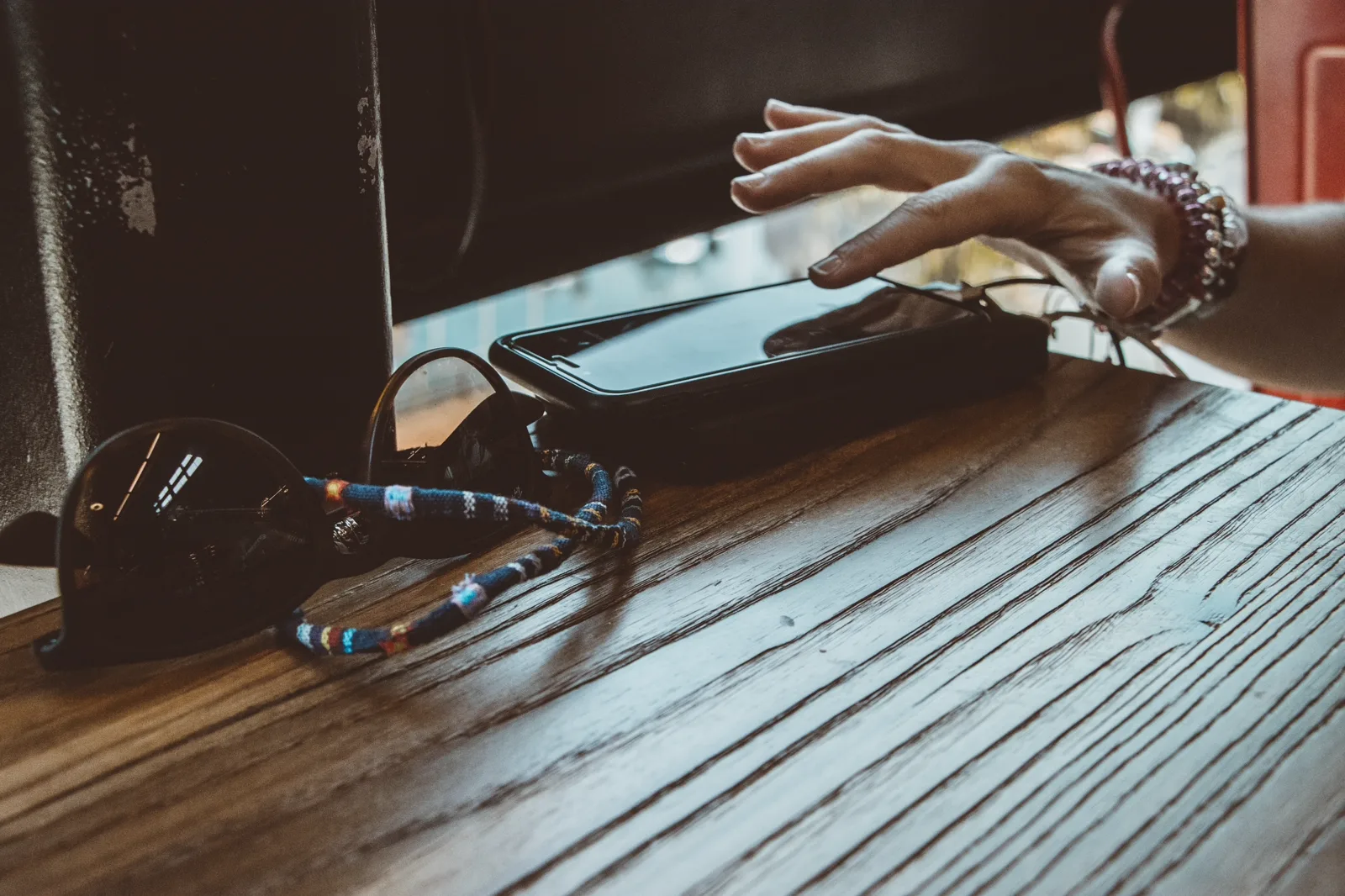
The Night-Wake Decoder
Tell it when the reach happens and what is really pulling you, and it decodes the mechanism behind your particular pattern, then hands you the fix that fits it. Pick one from each row.
Your hand reaches before you wake because you taught it to, one morning at a time. The good news is that a habit built by repetition can be unbuilt the same way. Move the phone, and the reach has nothing to find.
Why the phone is the first thing you reach for
The honest answer is that you trained yourself to, without meaning to. A habit is a loop: a cue, a routine, and a reward. Somewhere along the way, waking became the cue, reaching for the phone became the routine, and the little hit of messages, news, and novelty became the reward. Repeat that a few hundred times and the loop runs on its own; the reach fires before conscious thought, which is exactly why "just do not check it" feels so useless. You are not arguing with a decision, you are arguing with a reflex.
Underneath the loop sits the phone's variable-reward design, the same intermittent-reinforcement mechanism that makes gambling compelling. You never know what is waiting, and that uncertainty is precisely what makes the check so magnetic; a predictable phone would be far easier to ignore. Mornings sharpen all of this, because you wake into a natural cortisol rise and a groggy, low-resistance state called sleep inertia, when a well-worn habit meets almost no opposition. None of this means anything is wrong with you. It means a cleverly designed product met a normal human brain and did exactly what it was built to do.
The morning check quietly sets the day's tone
It feels harmless, and no single morning is a disaster, but reaching for the phone before you are fully awake has a real cost in how it starts you. You hand your first, freshest attention, before you have had a single thought of your own, straight to other people's demands, other people's curated lives, and whatever is most alarming in the news or your inbox. That can tip you into reactivity and a low hum of stress before your feet touch the floor, and it trains a fragmented, input-hungry attention that follows you into the day.
It also quietly spends something you do not get much of: the quiet, unclaimed few minutes at the very start of a day, one of the only naturally calm windows most of us get. Beginning the day on your own terms, with a breath, some light, a glass of water, a single thought of your own, before you let the world in, is a genuinely different way to wake. Not because the phone is evil, but because those first minutes are worth keeping for yourself.
The middle-of-the-night check does something worse
Here is the part most people do not know: waking briefly in the night is completely normal. Everyone surfaces between sleep cycles, several times a night, usually without remembering it, and normally drifts straight back down. The phone is what turns those harmless wakes into lost sleep. A two-minute awakening that would have faded becomes a thirty-minute one the moment you check, because the light nudges your brain toward wakefulness and the content re-engages a mind that was already halfway back to sleep.
Worse, repeating it teaches your brain a new trick. If the phone reliably appears at 3am with its little reward, your brain learns to wake more fully at that hour, looking for it, the same conditioning that drives the morning grab, now vandalizing the middle of your night. So the middle-of-the-night check is not just a symptom of a bad night; done enough, it manufactures them.

A reflex you cannot argue with, met by a pause you can
The reason willpower fails here is that the reach happens before you are awake enough to decide anything. Pax Gate is a mindful app blocker that installs the decision you cannot make in that half-asleep moment. It puts a small pause in front of the apps you open on reflex, so the first grab of the morning, and the one at 3am, meets a breath and a choice instead of an open feed. It is the difference between waking into your day and waking into everyone else's.
Join the Pax Gate waitlist A choice installed exactly where the reflex fires.How to break the reach
Because the reach is a conditioned habit, the fix is not more willpower; it is removing the cue and giving your waking a different first move. Four steps, in order of impact:
Charge the phone outside the bedroom
This is the whole game in one move. If the phone is not within arm's reach, the conditioned reach has nothing to fire at, so the habit cannot run. Use a standalone alarm clock so you have no excuse to keep it by the bed. The Bedside Phone Replacement Finder matches you to the alarm and objects that make this painless.
Give your waking a different first anchor
A habit is easiest to replace, not just remove. Decide in advance what your hand reaches for instead: a glass of water set out the night before, a few breaths, opening the curtains for morning light on your eyes, a single stretch. The new anchor claims the moment the phone used to own.
Delay the first check on purpose
Even a rule of "no phone for the first twenty minutes" reclaims the calm morning window and weakens the cue over time. The check will still be there; you are just no longer letting it be the very first thing that happens to you.
Put a pause on the nights it stays near
If the phone genuinely has to be in reach, a mindful app blocker turns the half-asleep grab into a moment of choice, so the reflex meets a breath instead of a feed. It is the backstop for when the phone cannot leave the room.
Make leaving the phone outside easy
The single most effective fix, charging the phone in another room, only sticks if the jobs it did are covered. The Bedside Phone Replacement Finder matches you to the alarm clock and bedside objects that make a phone-free nightstand genuinely comfortable.
Try the Bedside Phone Replacement FinderRelated guides and tools
FAQ
Why do I check my phone as soon as I wake up?
Because the phone has become a conditioned cue, and waking is its trigger. Months of grabbing it first thing have wired the transition from sleep to waking directly to the reach, so it fires automatically before you decide anything. Underneath is the variable-reward design: you never know what is waiting, and that uncertainty makes the morning check especially compelling. Add the natural morning cortisol rise and the groggy, low-resistance state of sleep inertia, and you have perfect conditions for an automatic reach. It is not weak willpower; it is a well-trained habit meeting its cue, which is also why changing the cue works so well.
Why do I wake up in the middle of the night and check my phone?
Waking briefly in the night is completely normal; everyone surfaces between sleep cycles, usually without remembering it. The problem is what the phone does to those wakes. A natural two-minute awakening that would have faded becomes a thirty-minute one the moment you check, because the light signals wakefulness and the content re-engages a mind about to drift off. Often the reach is conditioned, the same habit as the morning check, and sometimes anxiety or a fear of missing something drives it. Whatever starts it, the phone converts a harmless wake into lost sleep, and repeating it trains your brain to wake more fully at that hour.
Is it bad to check your phone first thing in the morning?
Not catastrophic, but it costs more than most people realize, mostly in how it sets the day. Reaching for the phone before you are fully awake hands your first, freshest attention to other people's demands, other people's lives, and whatever is most alarming in the news, which can tip you into reactivity and low-grade stress before your feet touch the floor. It also trains a fragmented, input-hungry attention that follows you through the day, and spends the quiet few minutes at the start of a day that are one of the only naturally calm windows you get. Starting on your own terms is a genuinely better way to begin.
How do I stop checking my phone when I wake up?
Change the cue rather than fighting the habit. The most effective step is to charge the phone outside the bedroom with a standalone alarm clock, so waking no longer puts it within reach and the trigger has nothing to fire at. If it must stay in the room, put it across the room and give your waking a different first anchor, water, a few breaths, a stretch, opening the curtains. Make a rule to delay the first check by ten or twenty minutes to reclaim the calm window. And on mornings the phone is near, a pause in front of the apps turns the automatic reach into a choice. Structure first; the habit fades once its cue is gone.
Why do I wake up at the same time every night?
Some of it is just how sleep works: you cycle through lighter and deeper stages and surface briefly at the transitions, often around the same times, usually without remembering. If you consistently wake fully at a particular hour, a few things may reinforce it: habitually checking the phone then can train your brain to wake looking for the reward; anxiety can rouse you at the same point; and alcohol, temperature, or a full bladder can wake you on a schedule. The key insight is that the waking is often normal; it is reaching for the phone that turns a brief, forgettable surfacing into a full awakening and teaches your brain to repeat it.
What should I do first thing instead of checking my phone?
Give your waking a different first anchor, chosen in advance so it is ready before the reach can fire. Good options are physical and simple: drink a glass of water set out the night before, take a few slow breaths while still lying there, stretch, open the curtains for morning light on your eyes (which helps your body clock and alertness), or spend a minute on a thought of what you are looking forward to. No single one is magic; the point is claiming the first few minutes of the day for yourself before handing them to other people's messages. Keep the phone out of reach so the new anchor is the easiest thing to do.
Sources
- Wood, W., & Neal, D. T. (2007). A new look at habits and the habit-goal interface. Psychological Review, 114(4). (On cue-routine-reward habit loops.)
- Wilmer, H. H., Sherman, L. E., & Chein, J. M. (2017). Smartphones and cognition: A review of research exploring the links between mobile technology habits and cognitive functioning. Frontiers in Psychology, 8.
- Chang, A. M., et al. (2015). Evening use of light-emitting eReaders negatively affects sleep, circadian timing, and next-morning alertness. Proceedings of the National Academy of Sciences, 112(4).
- Clow, A., Hucklebridge, F., & Thorn, L. (2010). The cortisol awakening response in context. International Review of Neurobiology, 93.
- Trotti, L. M. (2017). Waking up is the hardest thing I do all day: Sleep inertia and sleep drunkenness. Sleep Medicine Reviews, 35.
One last thing
There is something worth reclaiming in the first and last moments of consciousness each day. Right now, for a lot of us, both belong to the phone: it is the last face we see at night and the first we seek in the morning, and the 3am wake in between. None of that is a personal failing; it is a habit a very well-designed product taught your brain to run. But a habit built by repetition comes apart the same way. Move the phone out of reach, give your waking a gentler first thing to reach for, and let the brief, normal wakes of the night go back to being what they were before, moments you sleep straight through and never remember. The mornings feel different when they start with you.